Blisters In The Field
- You See
- Raised bubbles in the roof surface, soft when stepped on.
- What It Means
- Moisture trapped between plies expands in the sun and lifts the layers apart, and the blister cracks open over time.
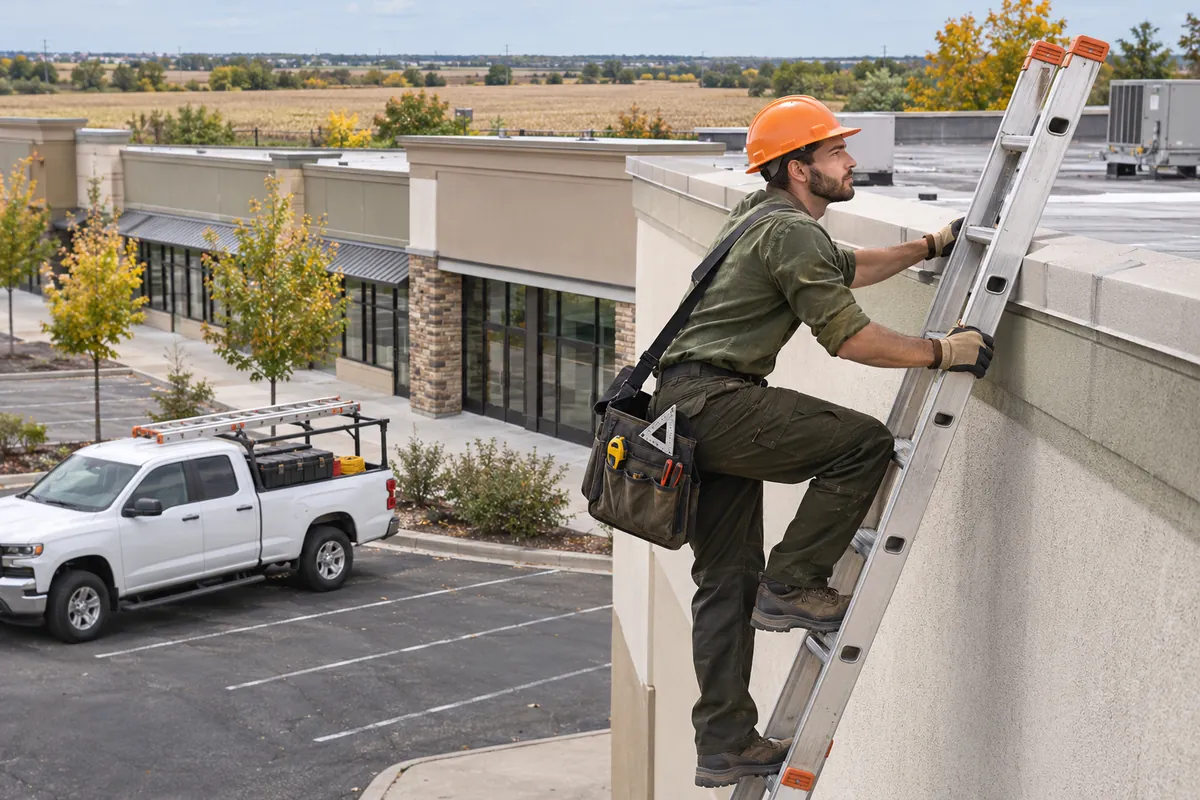

As a Ceresco commercial roof repair contractor, we cut out blisters, splits, and failed flashing on built-up and modified bitumen roofs and patch them with matching plies.

Ceresco commercial roof repair often means older built-up or modified bitumen roofs, the layered asphalt roofs found on many older commercial buildings.
Built-up roofs are layers of felt and asphalt, often with gravel on top. Modified bitumen is a heavier asphalt sheet. Both age by drying out, blistering where moisture is trapped, and splitting where the deck moves.
Repairs work best with matching materials: new plies or modified sheet over the damage, set in compatible asphalt or adhesive, with every patch edge sealed down tight.
Asphalt roofs show their age in a few ways. Each one points to a different repair.
Repairing an aged asphalt roof in the right places keeps it working while you plan what comes next.
A built-up roof with dry insulation and local damage can stay in service after its blisters, splits, and flashing are repaired with matching materials. That gives the owner time to budget a replacement on their own schedule instead of after a flood inside.
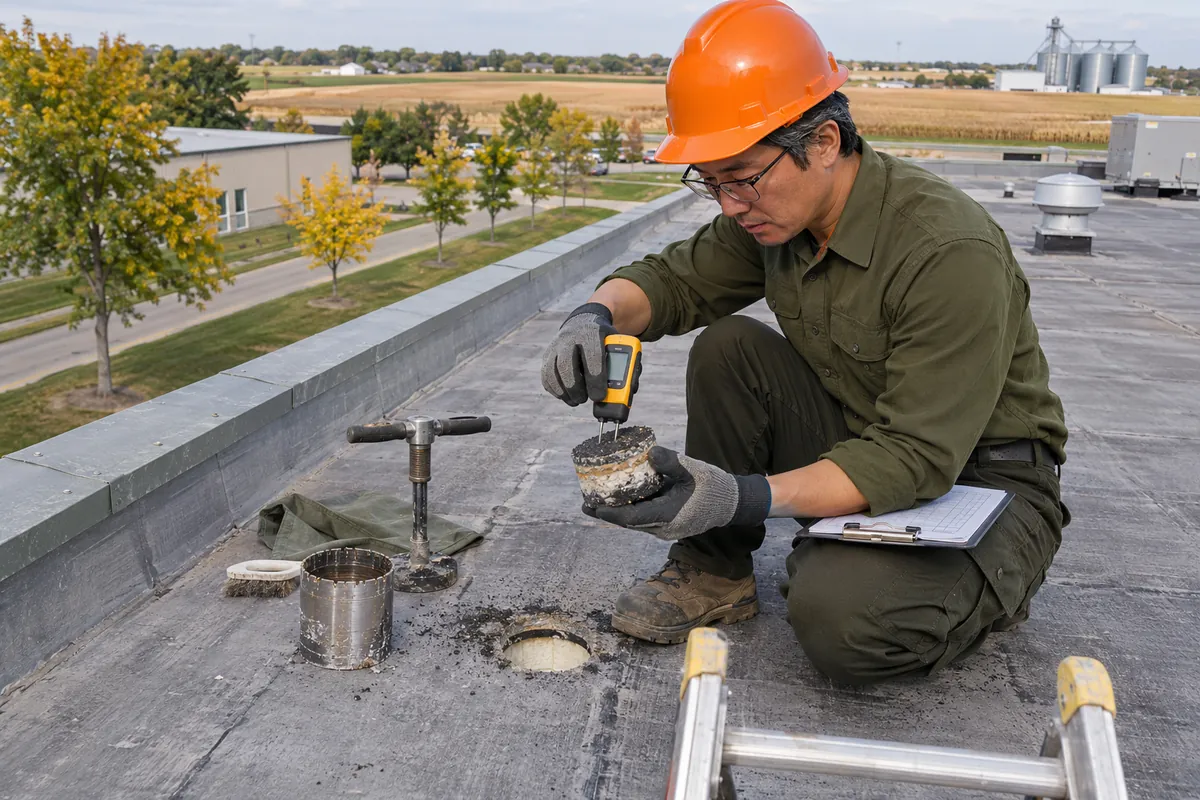
Core cuts show how many plies are there and whether they are dry.
The report rates each roof area so replacement can be budgeted in stages.
Patched splits stop drips onto stock, equipment, and office ceilings below.
These are the built-up and modified bitumen repairs Ceresco owners ask about most.
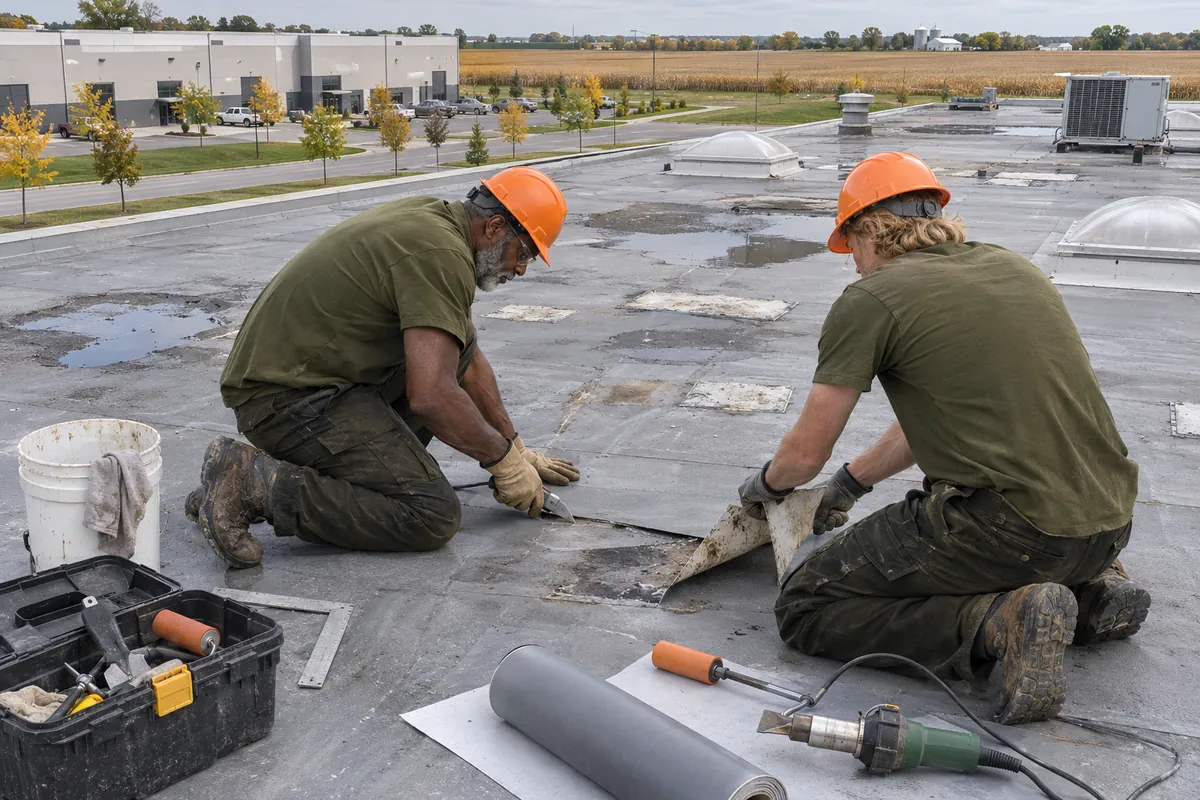
Each blister is cut open, dried, and covered with new plies or modified sheet set in compatible asphalt.
Splits get cleaned out and covered with reinforced patches that extend well past each side of the crack.
Bare areas are recoated and regraveled so the top ply stays shaded from the sun.
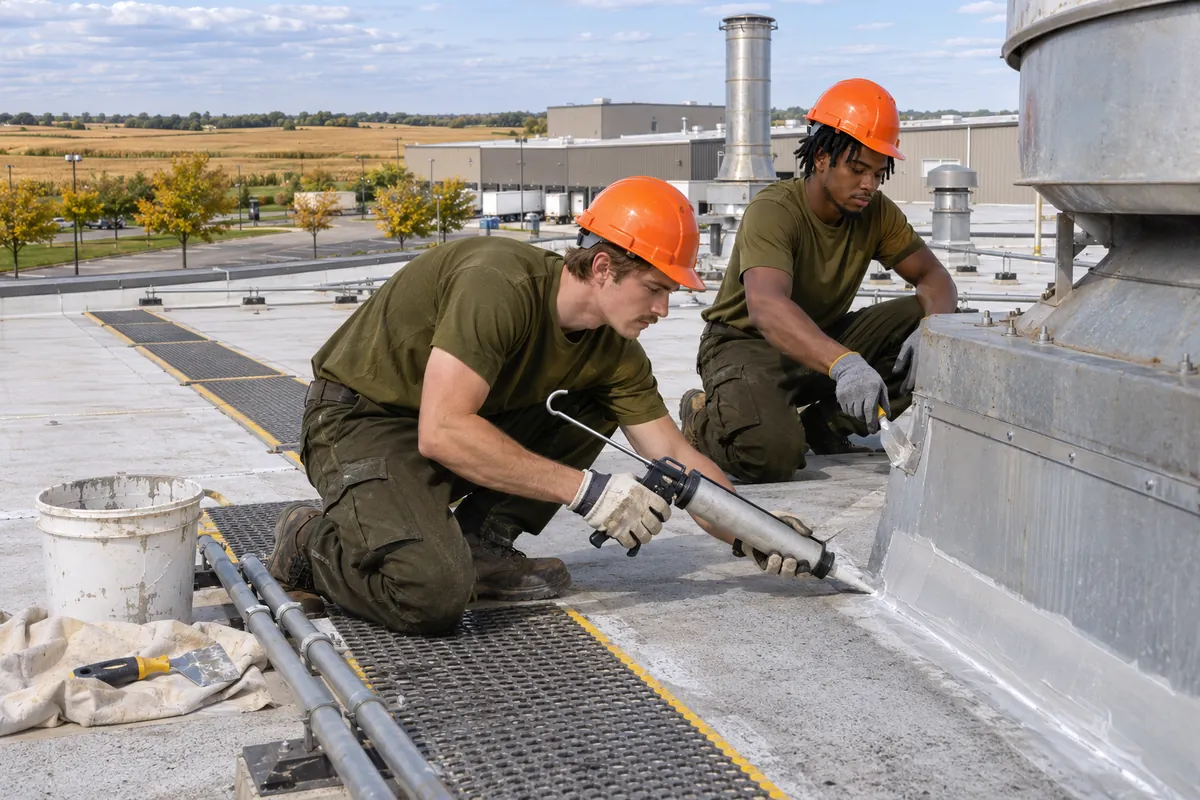
Cracked base flashing at walls and curbs is cut out and replaced with modified flashing sheet.
Blisters mean trapped moisture between the layers. Book an inspection and we will core the roof to see how far it goes.
Asphalt roof repairs start with the roof's history and a look inside its layers.
Tell us the age of the roof and past repairs if you know them, since old patch layers change how new material bonds.
We walk the field, flashing, and edges, take core cuts, and check moisture in the layers.
Blisters, splits, and wet sections are marked and photographed before anything is cut.
Damaged layers come out and matching plies or modified sheet go in, sealed at every edge.
Your report rates each roof area so you can budget future work with clear findings in hand.
We take commercial roof repair work in Ceresco, Papillion, and four more towns listed here. Outside that area? Call us or send us a message.

Our home base, with tilt-up warehouses, shops, and retail centers.
Strip centers where one leak can reach several tenant spaces.
Metal shops with fastener, lap, and skylight leaks.
Low flat roofs draining through scuppers and gutters.
Older masonry buildings with coping and parapet leaks.
Answers on built-up and modified roofs, gravel, blisters, roof age, and cost.
Damaged areas are cut out first: blisters, splits, and failed flashing. The area dries, then matching plies or modified sheet go down and the edges get sealed. Blisters form when moisture trapped under the felts expands, and splits open when the old membrane is too stiff to flex with the deck.
Yes. Gravel is swept back from the damaged area, the patch goes down over clean, dry plies, and the gravel is set back in fresh asphalt so the surface stays protected. The patch blends into the roof once the gravel is back in place.
Small, firm blisters with no cracks can be left and watched. Blisters that are soft, cracked, or growing get cut open, dried, and patched, because once the top ply splits, water gets in fast and spreads between the layers. The inspection marks each blister, notes which ones need work now, and lists the rest to check again next season.
When core cuts show wet insulation over large areas, splits keep opening in new places, or the plies have dried out and cracked across the whole field. At that point repairs only buy short stretches of time, and planning a replacement makes more sense. We say so plainly and show the core samples that back it up.
The number and size of blisters and splits, the flashing footage, and whether the insulation under them is wet. Gravel surfaces add time because the gravel has to be cleared and replaced around each patch. A core cut early in the visit tells us how much of the roof is involved.
Tell us the roof type and what you see on the surface. We will take core cuts, check the layers, and tell you whether it can take another repair.