Grease Around Exhaust Fans
- You See
- Dark, soft, or swollen membrane in a ring around a fan curb.
- What It Means
- Grease and solvent in the exhaust attack the membrane until it softens and splits near the fan.
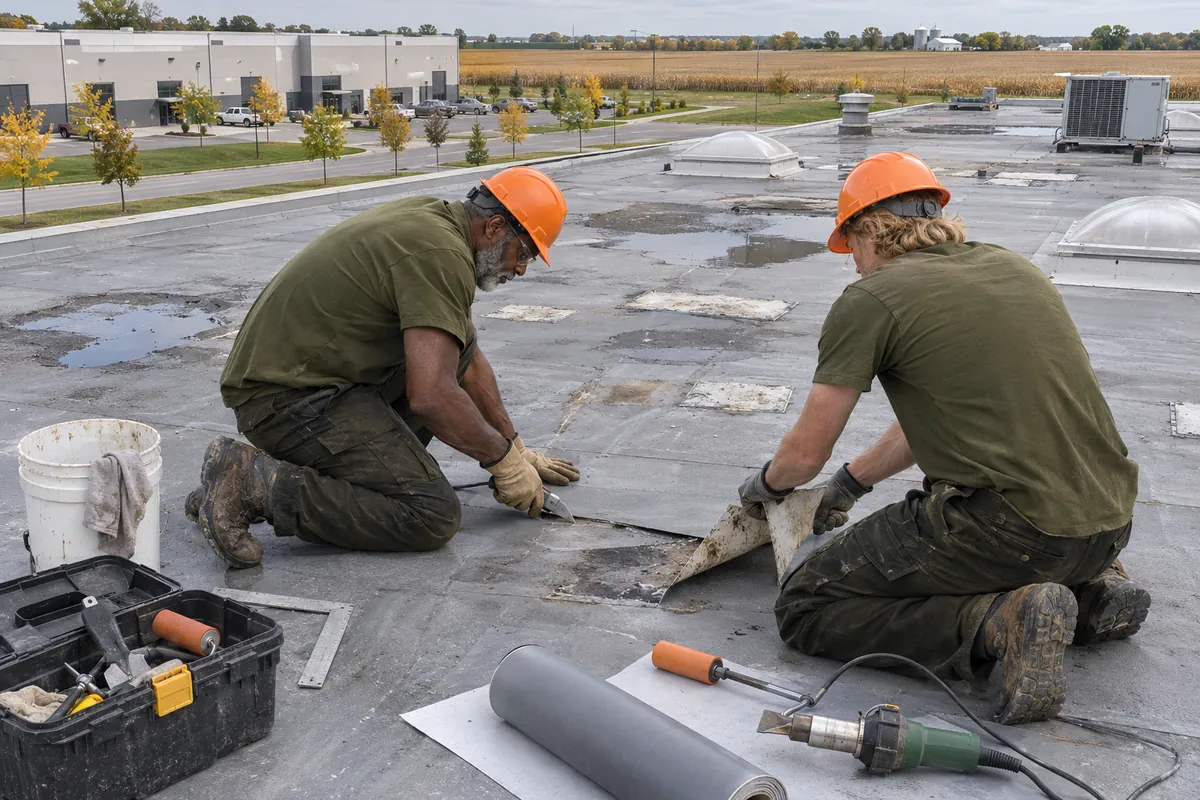
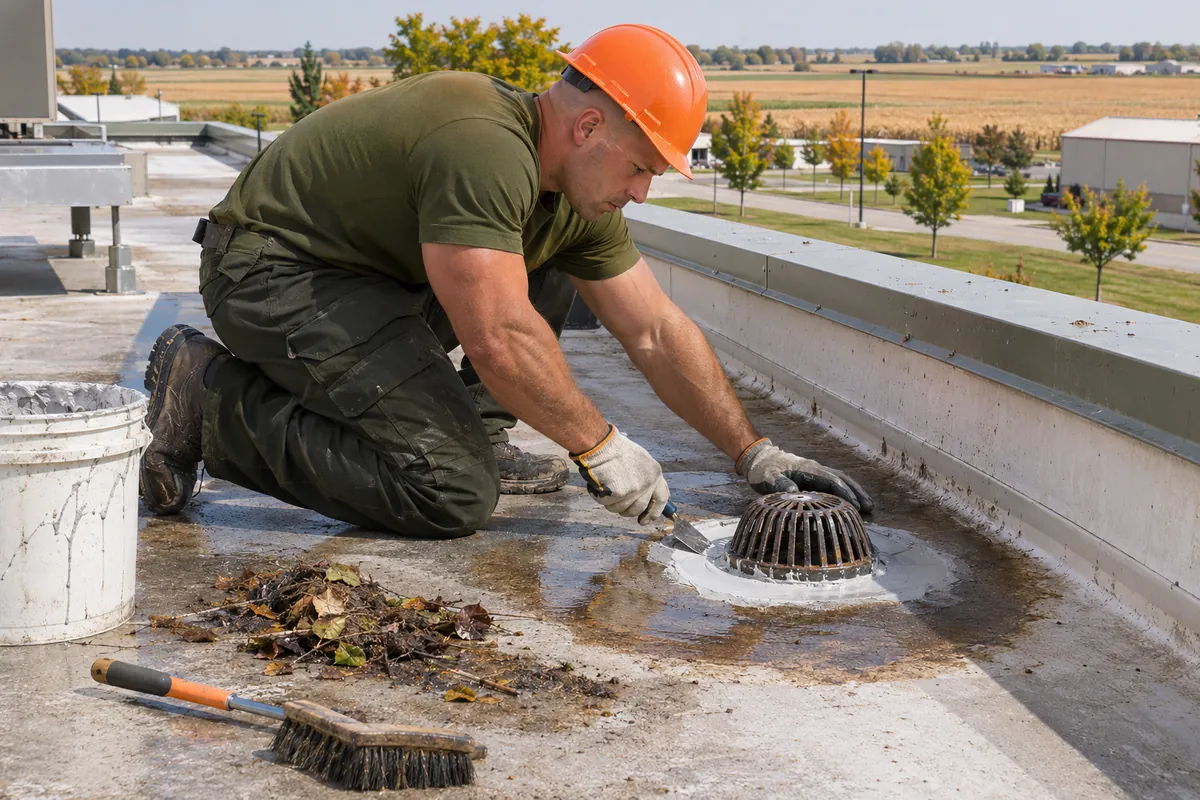
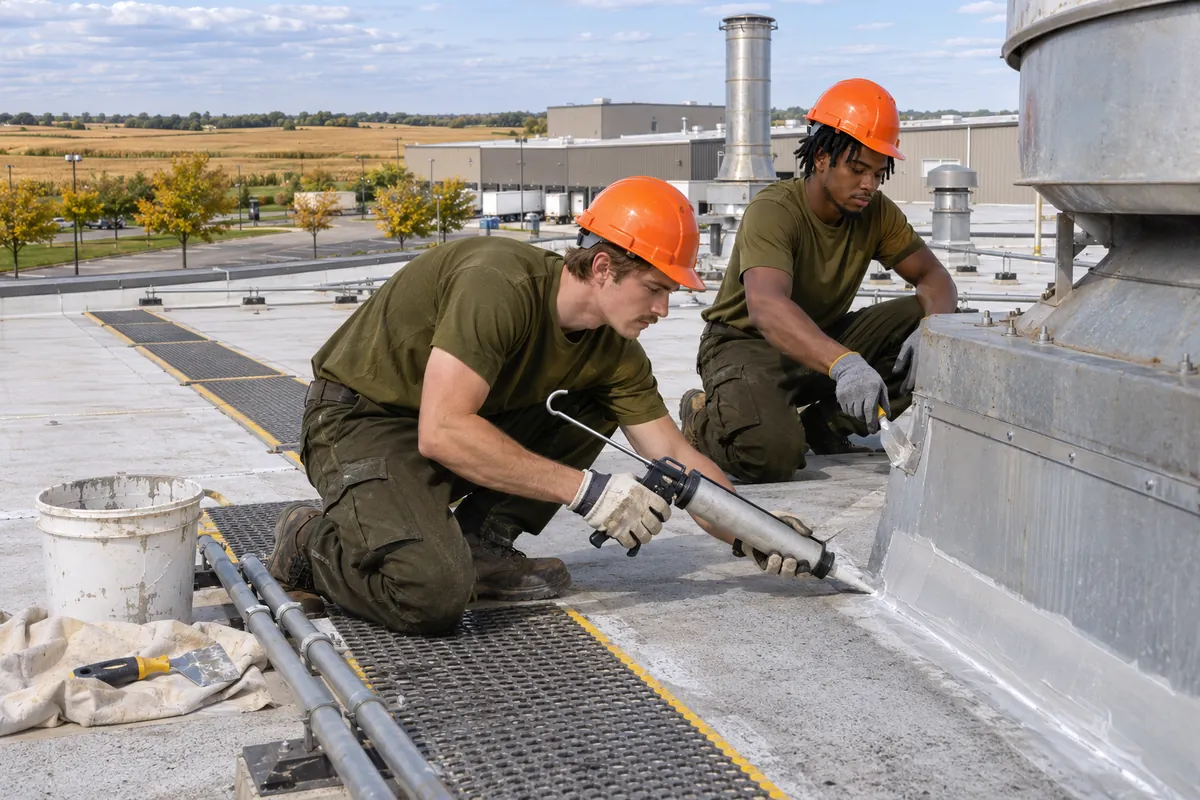
As a Papillion industrial roof repair contractor, we reflash exhaust curbs, stacks, and pipe penetrations and repair membrane worn by heat, grease, and traffic.
Fan curbs cleaned and reflashed
Work planned around shifts
Plant safety rules followed
Repair log for plant records
Papillion industrial roof repair handles damage around equipment and penetrations. Wider contamination or wet insulation moves the job toward a recover or new roof.
Plant roofs wear in different places than office roofs. These are the conditions we find most on industrial buildings.
Plant roof repairs focus on the details that equipment wears out. These are the four we handle most.
Residue comes off with a degreaser, softened membrane is cut out, and the curb gets new flashing, with grease containment where it helps.
Leaks at stacks, curbs, and pipe penetrations get traced, then reflashed with materials that tolerate the plant's exhaust.
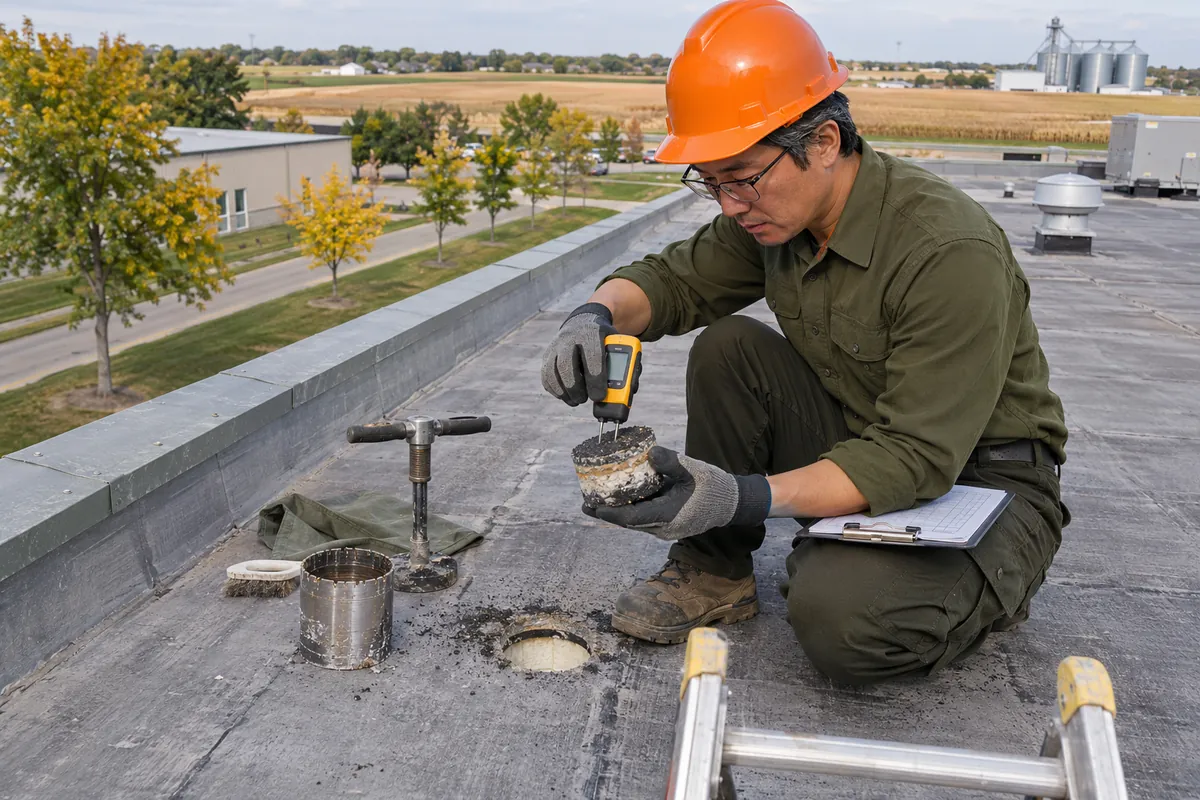
A full inspection checks membrane, seams, drains, curbs, and the underside of the deck, with a report sorted by urgency.
Twice-yearly drain cleaning, flashing checks, and walkway pad repairs catch wear before it turns into a leak over production.
Repairs timed around production keep the plant dry without shutting down lines for a full reroof.

A leak over a production line can stop work or ruin product. Repairing in sections, with covers over sensitive equipment below and fan shutdowns cleared with plant staff, closes the opening while the rest of the floor keeps running.
Hot work, lockout, and roof access follow the plant's own safety rules and sign-in process.
Each visit adds photos and notes to a roof log you can hand to insurers or corporate facilities staff.
Areas exposed to grease or chemicals get a membrane rated to resist them, so the repair holds near the source.
Softened membrane near a fan splits under the next freeze or foot traffic. Book an inspection and we will check every fan and stack on the roof.
Plant visits add safety and production steps around the roof work itself.
We check in with plant staff, review roof access, lockout, and hot work rules, and agree on which equipment can shut down.
Curbs, stacks, fans, drains, and seams get checked, along with moisture readings in areas exposed to exhaust.
Covers go over sensitive equipment and product under the roof work area before any cutting starts.
Residue is cleaned, damaged membrane cut out, and curbs and stacks reflashed with compatible materials.
Photos and notes go into your roof log, with any items to watch at the next scheduled visit.
Industrial buildings often need work beyond the equipment zone.

Open membrane field, drains, and wall flashing away from the equipment wear like any flat roof.
Flat roof repair
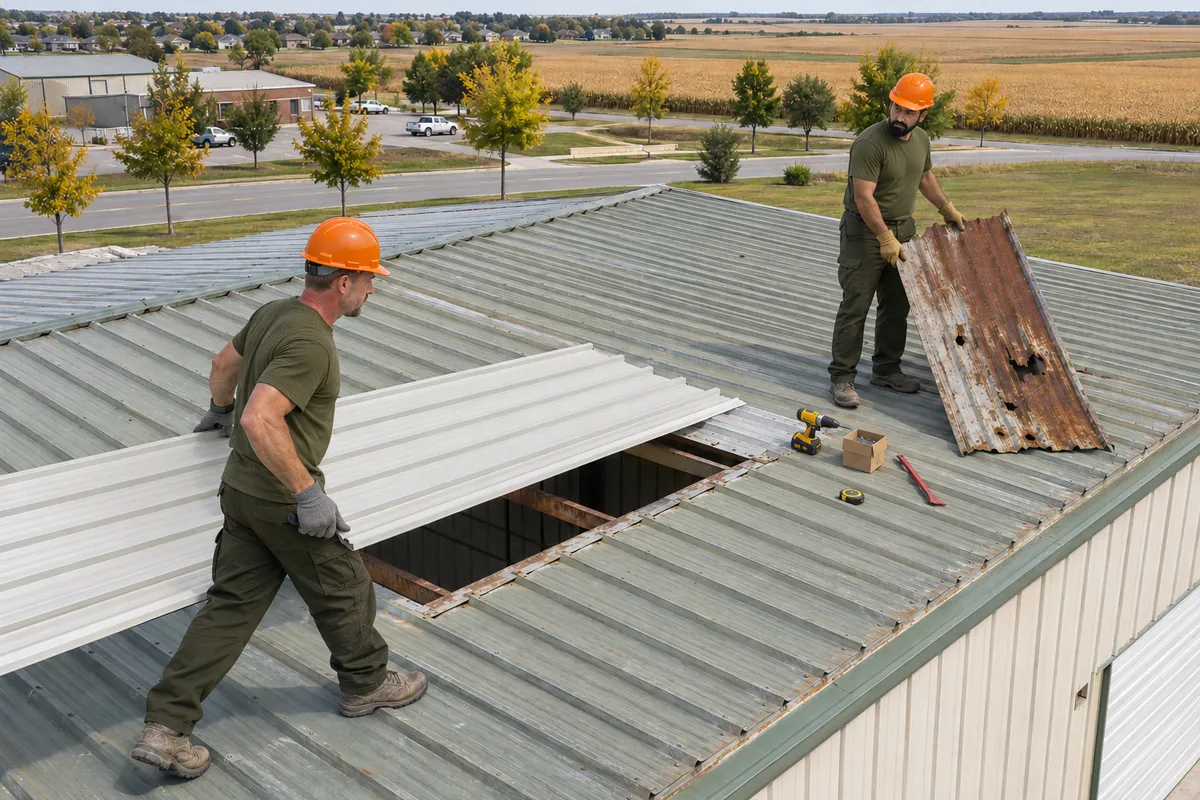
Steel warehouse wings and shop bays attached to the plant leak at fasteners and laps.
Metal roof repair
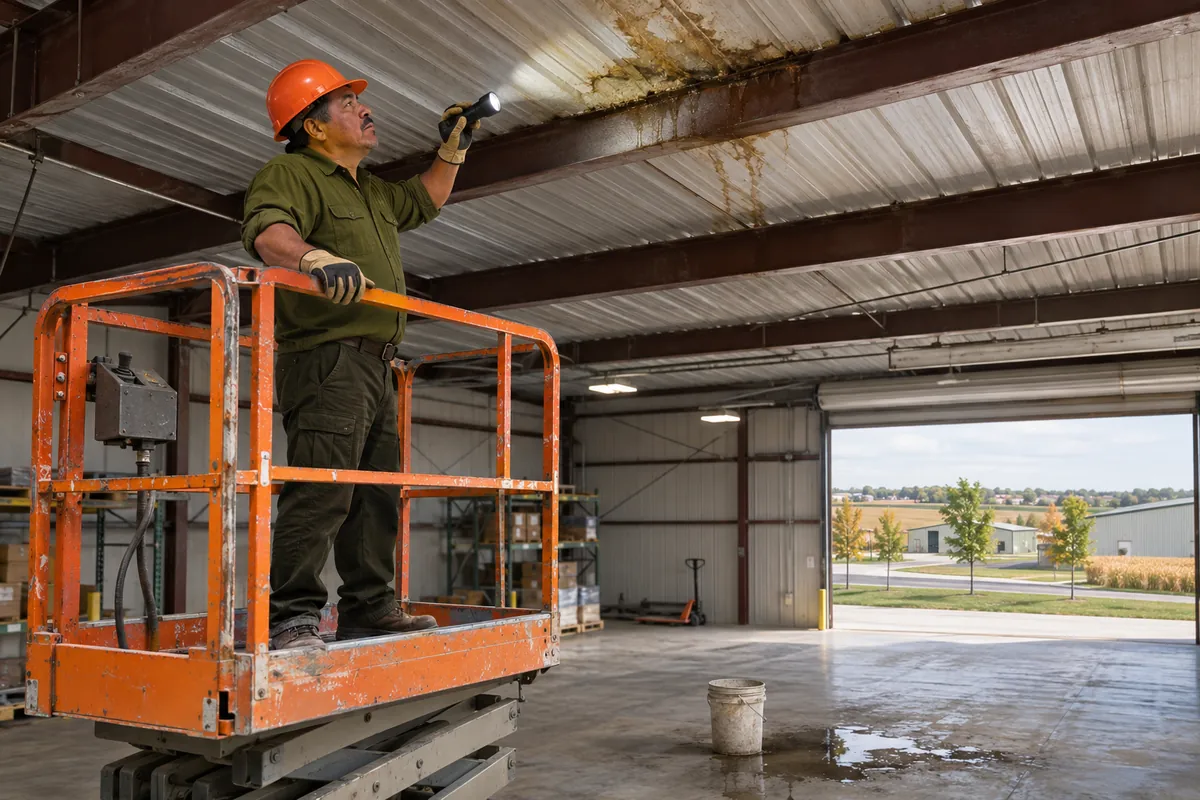
Drips over the plant floor get traced before anyone decides which detail failed.
Leak repairShort answers on plant roof leaks, exhaust fans, maintenance, inspections, and working around production.
Most start at failed flashing around exhaust stacks, equipment curbs, and pipe penetrations. Heat, vibration, and chemical exhaust wear those spots faster than the open roof, and membrane near grease or solvent vents softens and splits. We reflash with materials that tolerate the exhaust and replace the damaged membrane around each source.
Cleaning comes first, because grease and chemical residue keep new material from bonding. Softened membrane is cut out and replaced, the curb is reflashed, and grease containment or a more resistant membrane can be added. Fans are shut down only with plant approval while we work.
Plan on drain cleaning, flashing checks, and seam inspection twice a year. Process debris clogs drains quickly, and flashing at curbs and stacks needs resealing as it ages. Walkway pads protect the membrane on maintenance routes. We also check the roof after severe storms and log what we find for plant records.
The membrane, seams, flashing, drains, penetrations, and equipment curbs all get checked, along with signs of exhaust contamination, punctures from foot traffic, and ponding. Moisture testing finds wet insulation, and from inside we look at the deck underside for rust and stains. The report ranks repairs by urgency, with photos of each one.
Yes, in most plants. Work is planned around shifts and equipment, covers go over sensitive areas below, noisy work moves to off-hours where allowed, and shutdowns are coordinated with plant staff. Hot work follows the plant's safety rules, and repairs finish section by section so production areas stay dry.
Tell us what runs under the roof and which equipment sits on it. We will plan the repair around your shifts and safety rules.