Screws Backing Out
- You See
- Screw heads raised above the panel, some with rust trails.
- What It Means
- Daily expansion works the screws loose, and each loose screw leaves a hole its washer no longer seals.
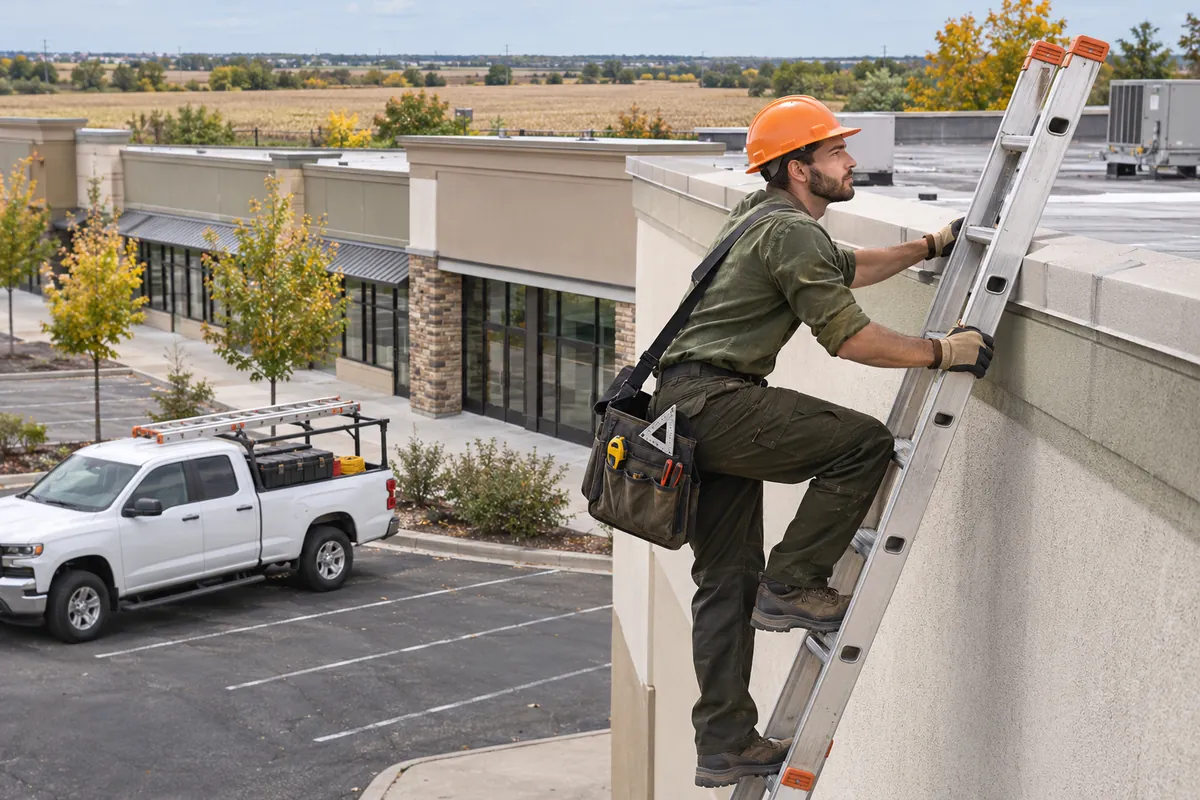

As an Eagle commercial roof repair contractor, we fix leaking metal shop and equipment building roofs: fasteners, laps, skylight panels, and trim.

Eagle commercial roof repair calls often come from steel shops and equipment buildings, where most leaks start at screws, laps, and skylight edges.
Exposed-fastener metal roofs move every day as the sun heats them and the night cools them. That movement loosens screws, cracks washers, and works sealant out of the laps.
Shops also add openings over the years: vents, skylight panels, and holes left by removed equipment. Each one needs its own flashing, and each one is a place to check when water shows up on the floor.
Metal shop roofs give off clear signs before a leak gets bad. Here is what each one means.
Closing the openings in a steel roof keeps equipment, tools, and stock dry without re-sheeting the building.
Replacing failed screws and resealing laps on a shop roof closes hundreds of small holes at once. Trucks, equipment, and stored materials stay dry, and the panels last longer because water stops sitting at the fastener lines.
Dry laps keep rust from spreading inside the joint, where it is hardest to see from the ground.
New skylight panels keep the light in the shop and the rain outside on the panels.
The report flags thin or rusting panels so replacement can wait for the right season.
These are the metal roof repairs Eagle shop owners ask for most.
Screws come out row by row and new ones with fresh washers go in, oversized where the old holes stripped.
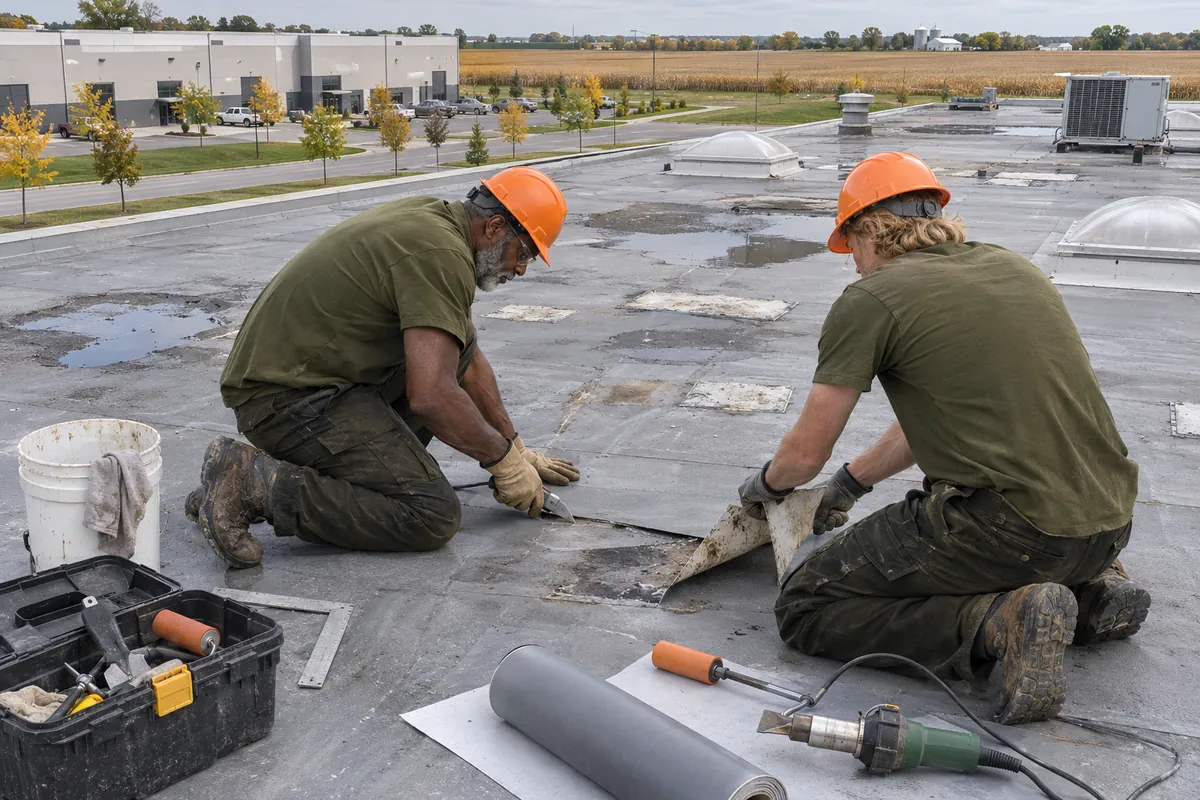
Dried sealant is scraped out, butyl goes into the lap, and seam tape covers the joint on top.
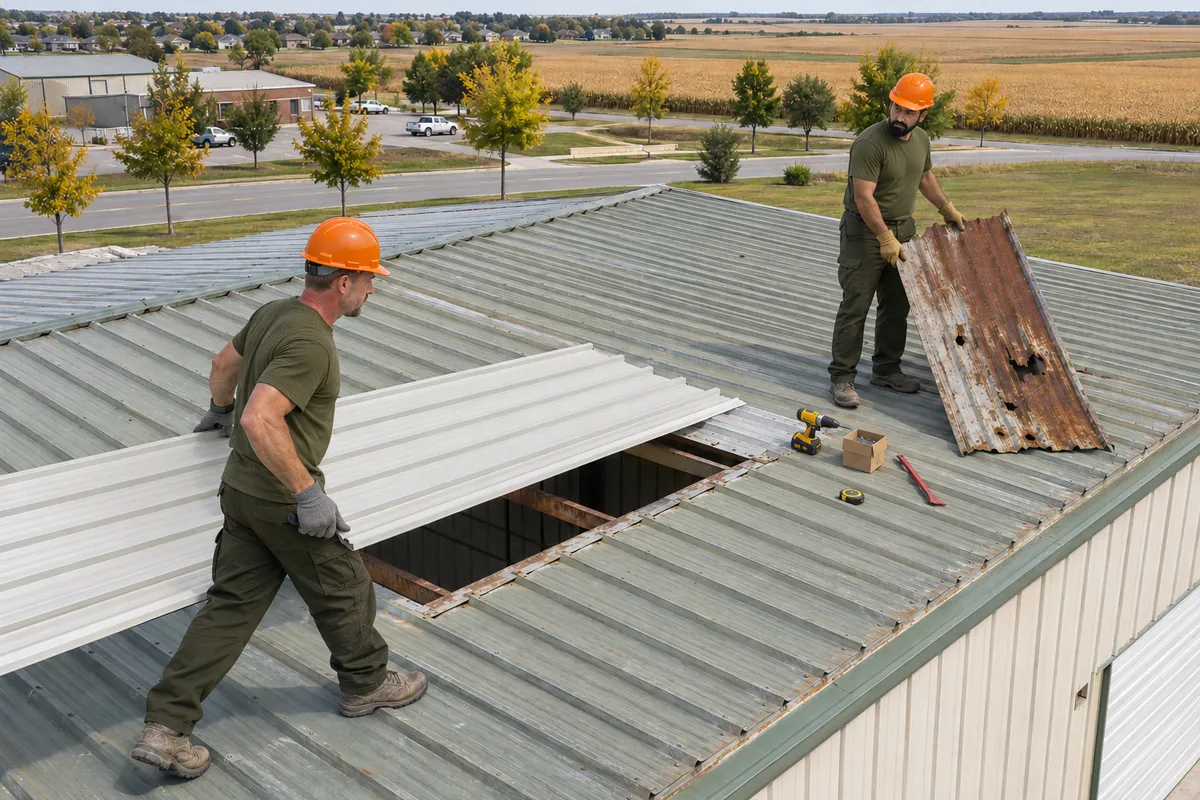
Cracked panels are replaced with the same rib profile and fastened through new closures.
Rake, eave, and ridge trim is pulled tight and fastened back with new screws.
That can be condensation, a slow drip from a lap, or both. Book an inspection and we will sort out which one before anything gets patched.
Shop roof visits start inside, where the drips and daylight show which slope to work on.
Checking the panel undersides early in the day shows whether drips come from condensation or from an opening.
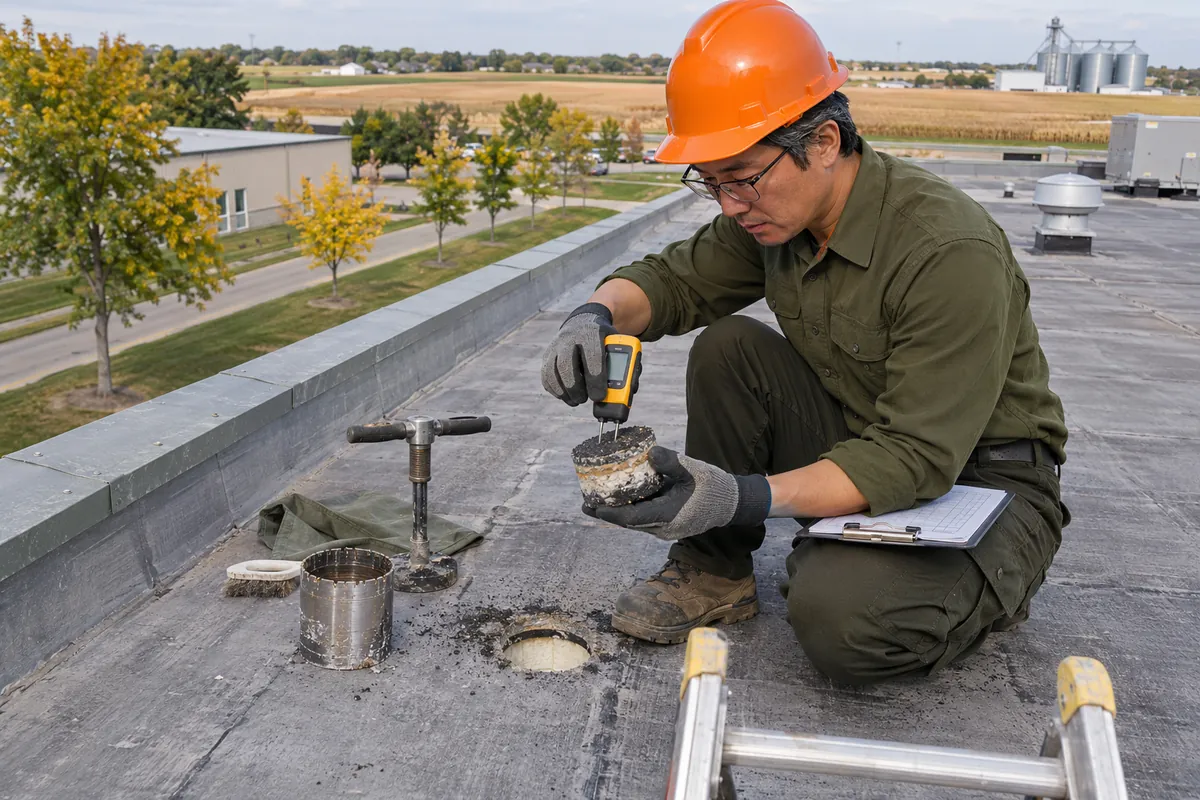
We walk the screw lines, laps, skylights, vents, and trim on each slope and photograph every failure.
Loose and cracked fasteners are swapped for new screws and washers set at the right torque.
Laps get cleaned and sealed, and cracked skylight panels come out for matching new ones.
Your report shows which panels were repaired and which ones to keep an eye on.
Along with Eagle, we take commercial roof repair work in Papillion and four more towns. Somewhere else? Call us or send us a message.

Our home base, with tilt-up warehouses, shops, and retail centers.
Strip centers where one leak can reach several tenant spaces.
Low flat roofs draining through scuppers and gutters.
Older masonry buildings with coping and parapet leaks.
Built-up and modified roofs with blisters and splits.
Answers on shop roof leaks, old screw holes, cost, re-screwing, and our service area.
By checking every detail that opens on a steel roof: fasteners, end laps, trim, skylight edges, and vents. Since condensation can look a lot like a leak, we also check the panel undersides on a cold morning. Then the failed screws are replaced, the laps resealed, and any cracked skylight panels swapped out.
Yes. Empty holes left by old signs, vents, or equipment brackets get a metal patch fastened over them and sealed at the edges, which holds up far better than caulk alone. We look for those holes on every shop roof, since owners often forget they are there.
Mostly how many screws, laps, and skylight panels have failed, and how tall and steep the roof is. A few dozen fasteners over one bay is a short job. Re-screwing a whole slope, resealing every end lap, and replacing several skylights takes more material and more time on the roof.
It depends on how many fasteners have failed. When washers are cracking across most of a slope, re-screwing that whole slope makes more sense than chasing single leaks. When failures are scattered, replacing only the bad screws is enough. The inspection count tells us which case you have.
We do, from Papillion. Eagle sits inside our service area for shop, equipment building, and storefront roofs. Call or send a message with the building type and where the water shows up, and we will set an inspection time that works for your shop.
Tell us about the shop, the roof panels, and where the drips land. We will check each screw line and send photos of what failed.