Water Rising Over Laps
- You See
- Leaks only during downpours, dry in light rain.
- What It Means
- Water stacks up deep enough to reach a lap edge or a low wall flashing. Raising the flashing or clearing the drain stops it.
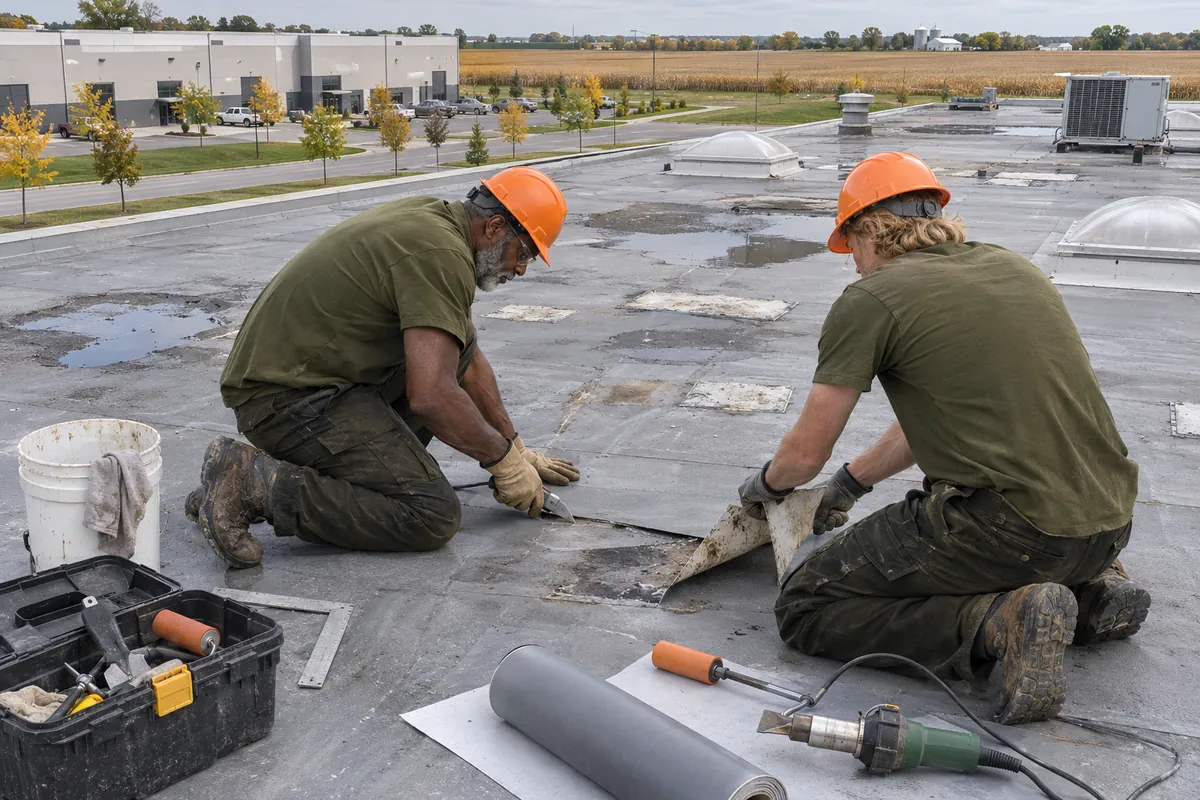
As a Papillion flat roof repair contractor, we reset drains, close open laps, and reflash walls on low-slope membrane and built-up roofs.
Drains reset and reflashed
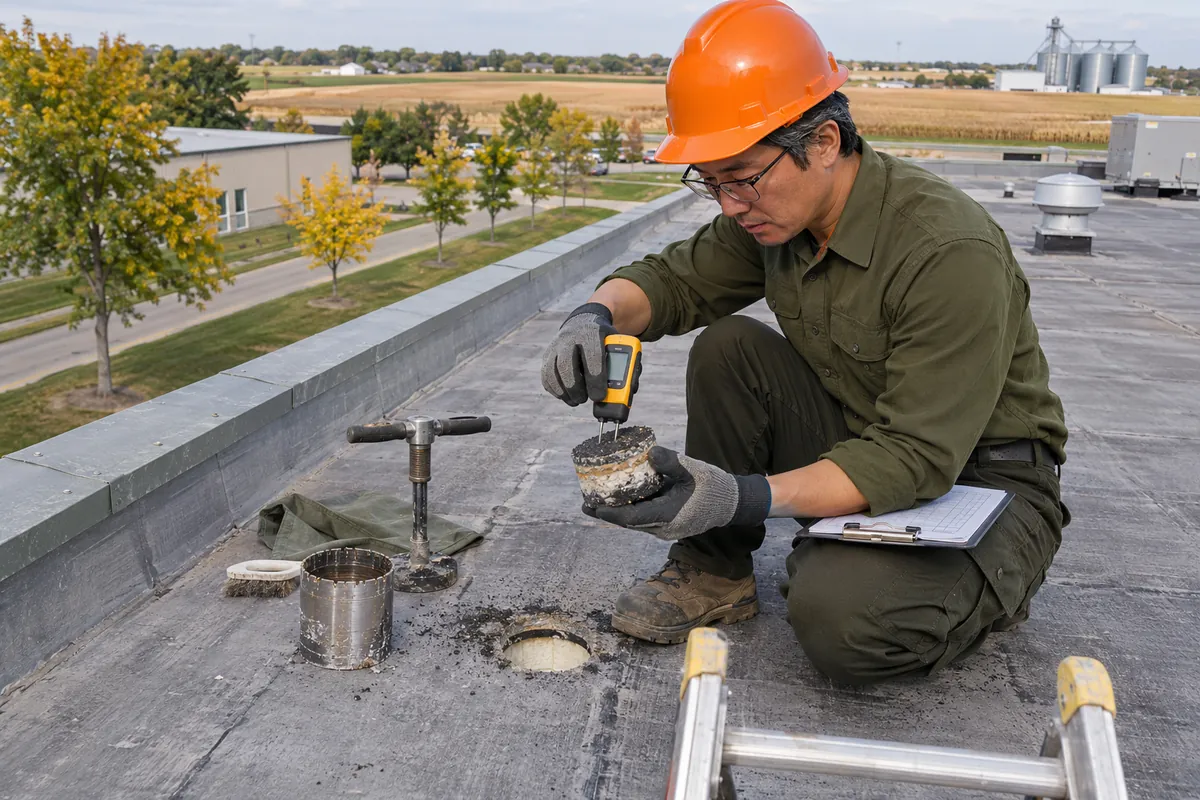
Core cuts before patching
TPO, EPDM, PVC, BUR, mod bit
Photo report for each area
Papillion flat roof repair fits most roofs with local damage. The table shows where repair ends and a recover or replacement begins.
Most flat roof leaks around Papillion come from a short list of causes. Each card names what you see and what it tells us.
Each repair below targets one detail. Most service calls use two or three of them together.
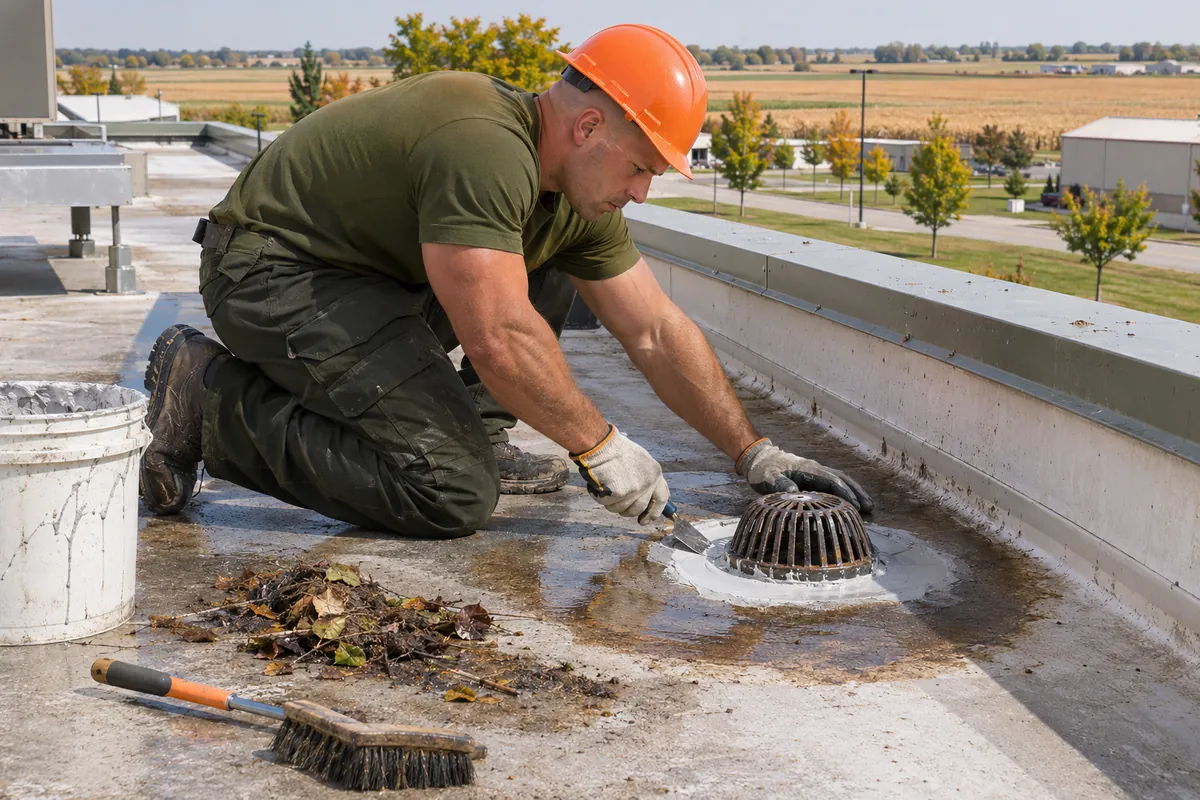
Clearing the line, resetting the clamping ring, and replacing the drain flashing stop water from slipping under the membrane at the bowl.
Crickets and tapered board steer water to the drain, and crushed insulation in low spots gets cut out and replaced.
Single-ply laps are cleaned and heat-welded or primed and taped; built-up roofs get matching plies over the split.
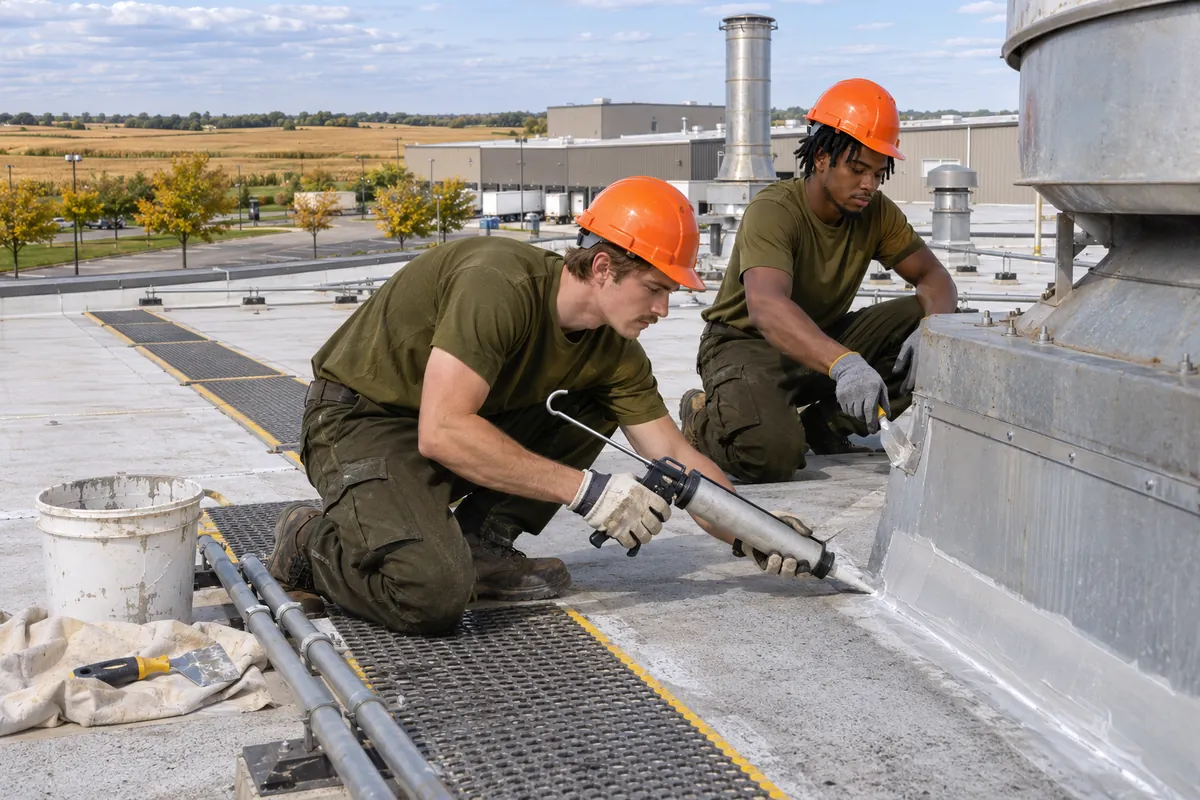
New base flashing goes up the wall far enough to stay above standing water, with termination bar and counterflashing at the top.
Fixing the detail that failed keeps the rest of a dry roof in service longer.

Most flat roof damage starts with water that stays too long. A drain that sits low and clear, laps that sit above the waterline, and flashing tall enough to clear standing water all cut down the hours water spends against the membrane.
Sealing the lap or drain above an office stops the stain from spreading across ceiling tile and the insulation above it.
Cutting out soaked insulation during the repair keeps trapped water from rotting the deck or feeding the next leak.
A repair buys time on an older roof, so replacement can be planned for the budget year that fits your property.
Ponding that lingers points to a drain or low spot that needs work. Book an inspection and we will measure where the water sits.
Five steps, from the drip inside to photos of the finished repair.
Tell us whether the leak shows in every rain or only in downpours. That one detail separates a drain problem from a lap problem.
Moisture readings and core cuts around the drip show whether the insulation is dry enough to patch over or needs to come out.
Debris comes off strainers and out of the line first, so the roof drains while we work and the test at the end is fair.
Laps get welded or taped, wet board is replaced, and flashing goes back at a height that clears standing water.
You get before and after photos of each repaired lap, drain, or wall and a note on anything we saw that will need work later.
Flat roofs often share a building with metal additions, rooftop equipment, and leaks that need tracing.

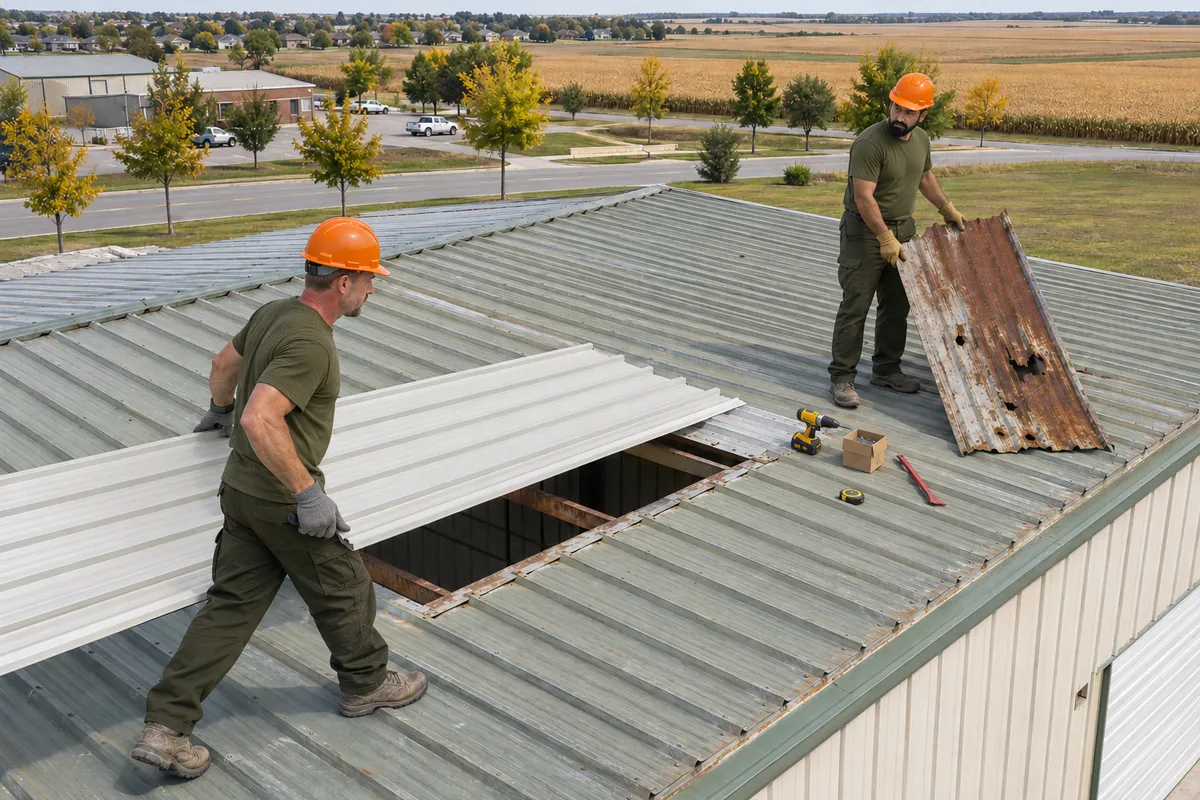
Steel additions and shop wings beside a flat roof leak at screws, laps, and trim.
Metal roof repair
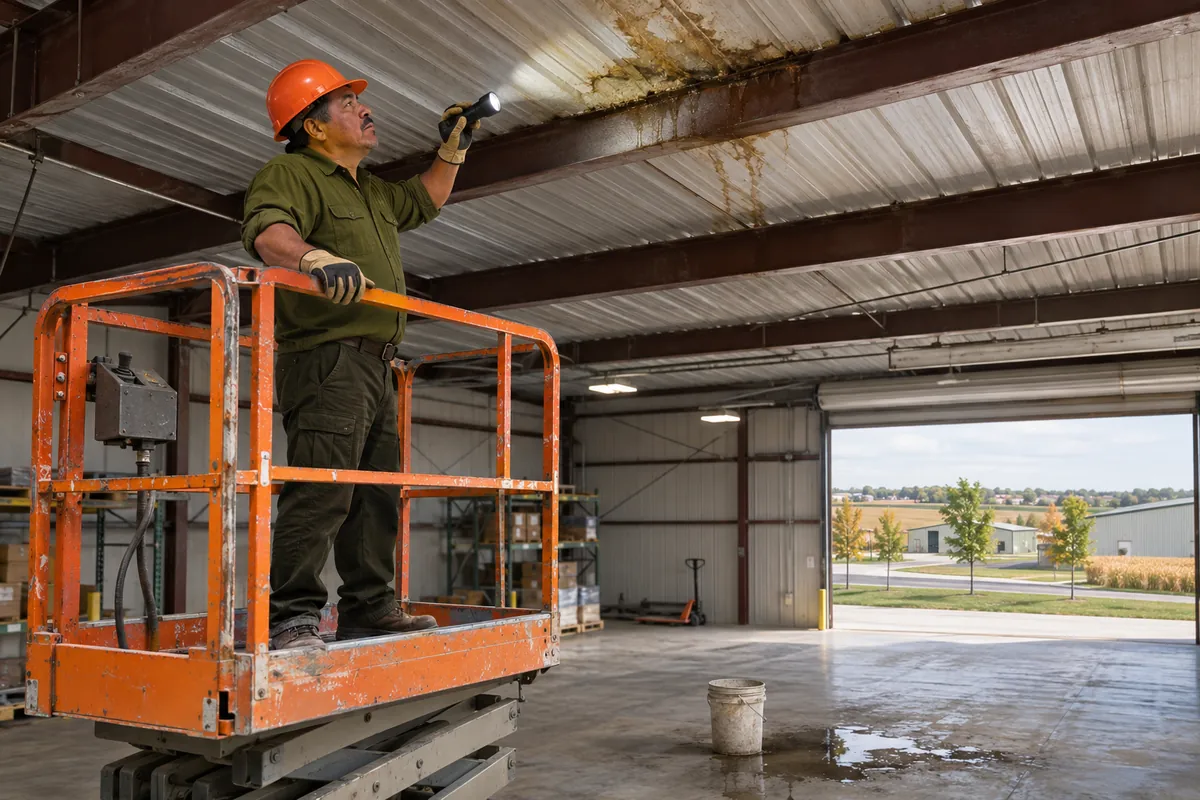
Drips that land far from any obvious damage get traced back to the opening first.
Leak repair
Plant roofs crowded with fans, stacks, and pipe penetrations wear out flashing fastest.
Industrial roof repairShort answers on leaks, ponding, repair choices, winter work, and permits.
Heavy rain fills the roof faster than the drains can empty it, so the water line climbs past laps and wall flashing that stay dry in a light shower. A half-clogged strainer or a scupper packed with leaves makes it worse. Wind can also drive rain behind loose counterflashing. We start at the drains and work out toward the drip.
Change why the water sits there. Clogged or high drains get cleared and reset, crickets go in to push water toward them, and crushed board in low spots is replaced. Tapered insulation handles wider flat areas, and a sagging deck gets a structural look before any membrane work.
Patching works when the hole is small, the membrane still bends without cracking, and the board underneath is dry. Section replacement is the better choice when the sheet is brittle, laps are failing along a whole run, or cores come back wet. Putting a patch over wet insulation only seals the water in.
Drain work starts with clearing the bowl and line, then checking the clamping ring that holds the membrane down. Loose rings get reset, cracked strainers replaced, and failed drain flashing cut out and redone. If the drain sits higher than the roof around it, we lower it or build tapered board so water reaches it.
Yes, with the right method for the temperature. Snow and ice are cleared and the area dried before any patch goes down, and we use adhesives and sealants rated for cold application. When a permanent repair needs warmer weather, a temporary dry-in holds the opening until a mild day.
It depends on which jurisdiction covers the parcel. Sarpy County's Planning and Building Department handles areas outside city limits, except the city's extraterritorial areas, and Papillion handles projects inside its zoning and building jurisdiction. The county lists re-roofs among projects that need a permit and has an online map for checking jurisdiction.
Send us the address and where the water shows up. We will check the drains, cut a core, and tell you whether a patch will hold.