
Leaks Only In Downpours
- You See
- Drips during heavy storms that stop when the rain slows.
- What It Means
- Water is rising high enough to reach a lap, a low flashing, or a slow drain. Light rain never gets that deep.

As a Papillion commercial roof leak repair contractor, we trace water from the ceiling stain back to the opening and seal it on any roof type.
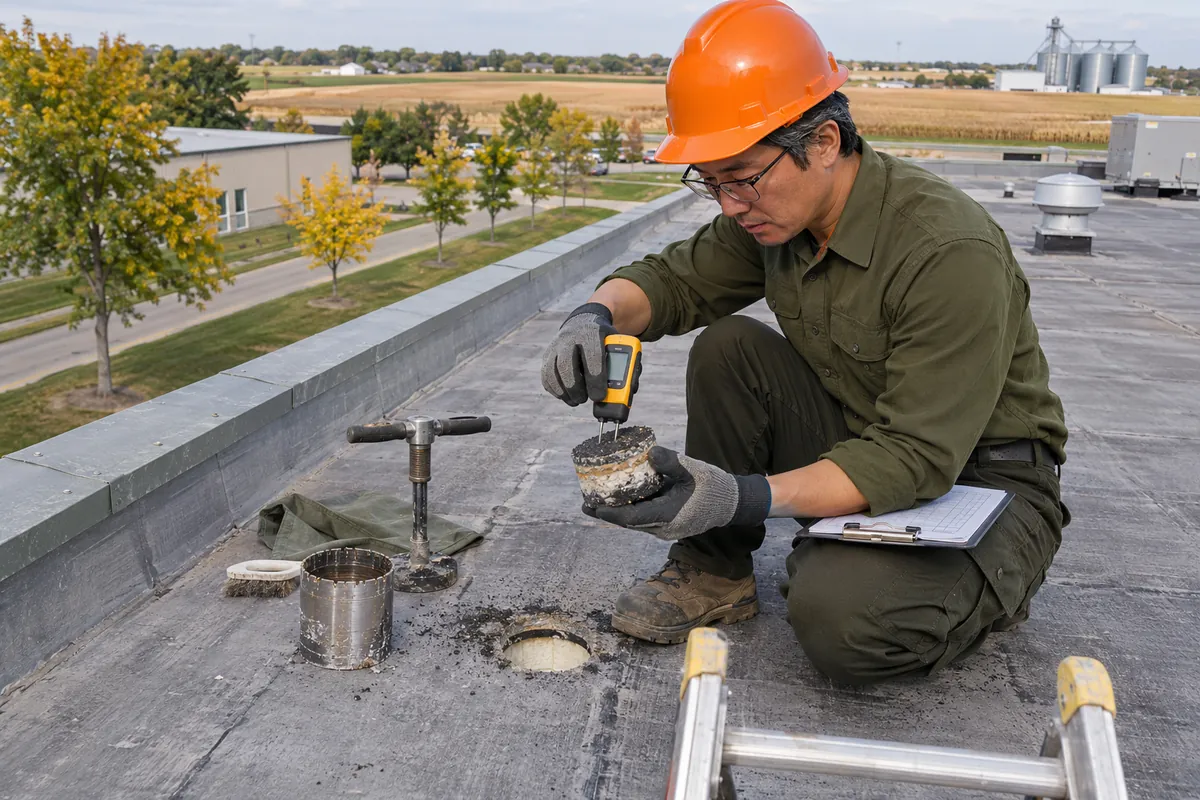
Moisture meters and core cuts
Curbs, drains, seams, and walls
Hail and storm leak checks
Photos of the source
Papillion commercial roof leak repair closes one opening at a time. The table shows when a pattern of leaks calls for more than that.
Leaks travel before they drip. These causes explain most of the gap between the stain inside and the opening on the roof.
These are the leak sources we repair most. Each one gets traced and confirmed before the fix goes on.
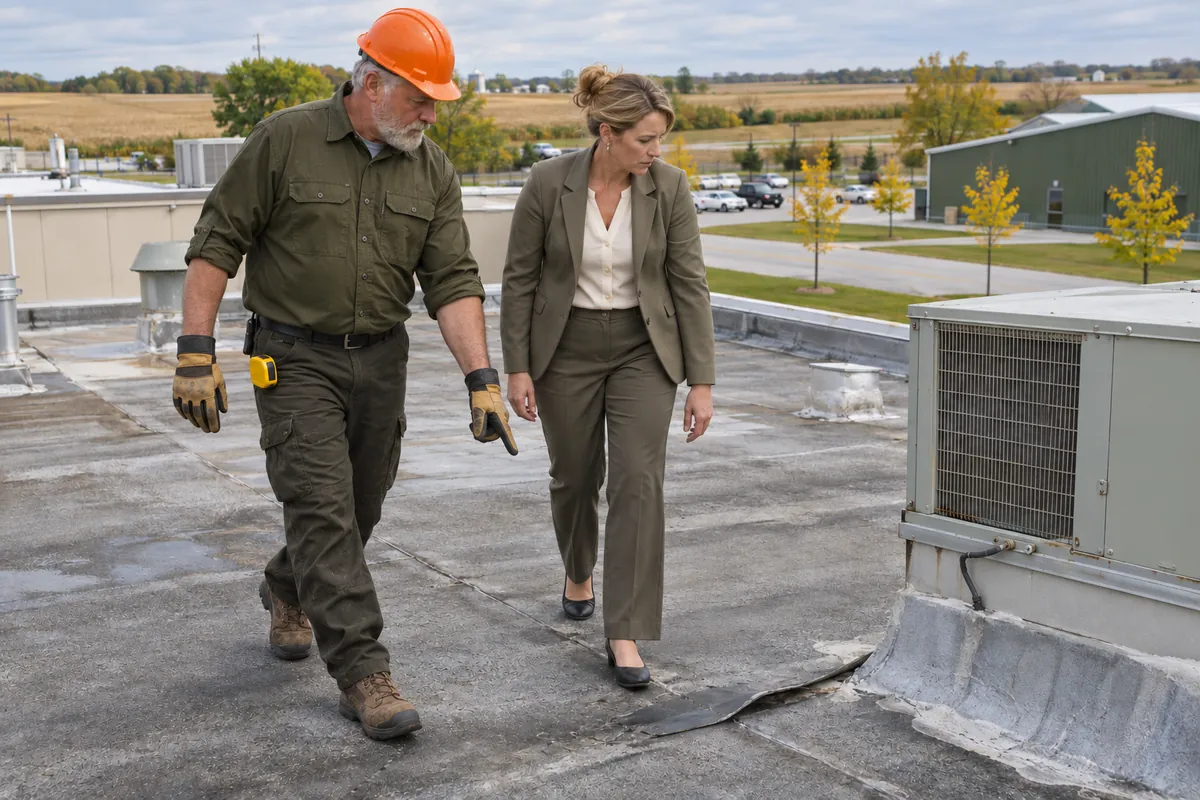
We mark the drip, follow deck flutes and purlins upslope, and use moisture readings and controlled water tests to pin the opening.
Curb flashing gets replaced, loose cabinet panels refastened, and clogged condensate lines cleared so water stays off the curb.
Split and punctured membrane is patched or replaced, cracked sealant redone, and every repair photographed for your insurance file.
Pipe boots, pitch pans, and conduit supports get new flashing and fresh sealer where the old material pulled away.
Finding the real source the first time keeps you from paying for patches in the wrong place.

Water can run several feet along a deck flute or purlin before it drops. Tracing it with readings and a water test puts the repair on the actual opening, so the stain stops growing instead of moving to the next ceiling tile.
Closing the roof opening over racking keeps product, pallets, and cardboard from soaking through.
Leaks near light fixtures and electrical panels get priority, which keeps water away from wiring below the deck.
Dated photos of hail and storm damage on the roof support a claim when you file one.
Hail damage keeps opening up after the storm passes. Call us and we will check the whole roof field along with the spot that drips.
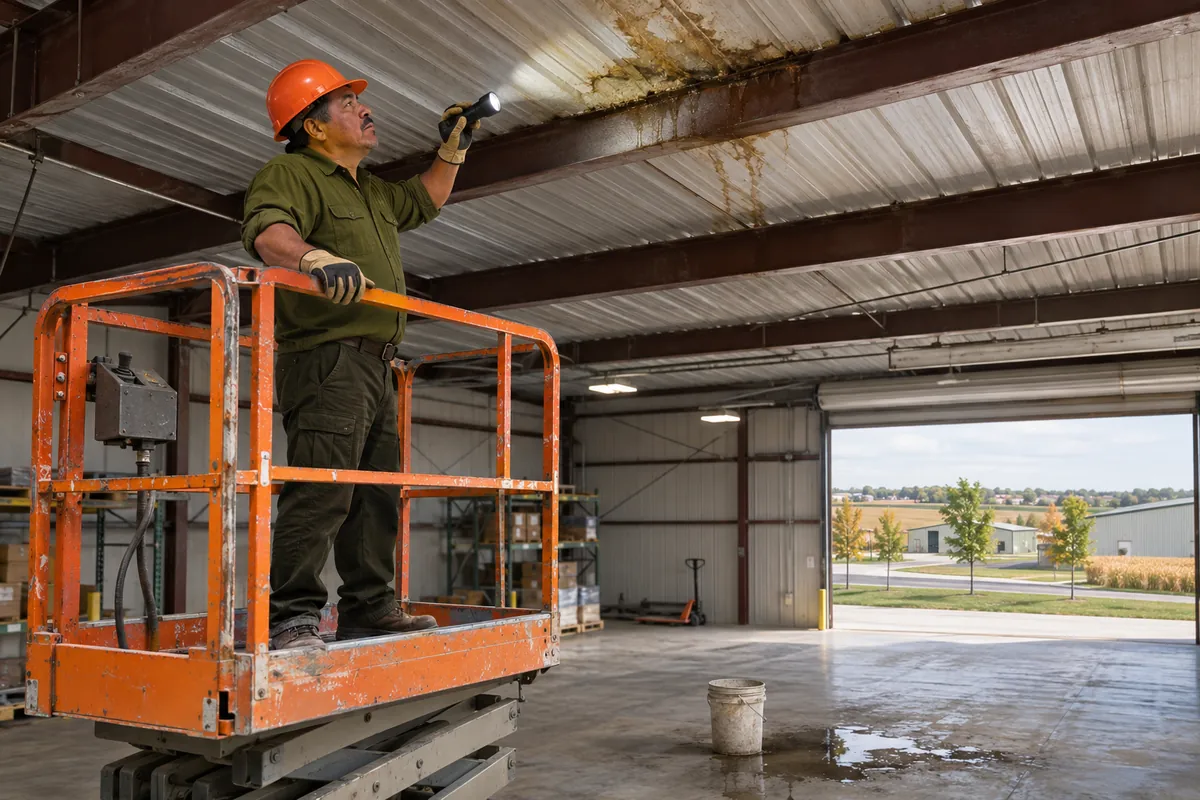
Leak work moves back and forth between the inside of the building and the roof until the source is confirmed.
Point us to every stain and drip inside, and note whether it shows in all rain or only in storms with wind.
Above the drip and upslope from it, we take moisture readings and check every seam, curb, and penetration in range.
A controlled hose test on one detail at a time, with someone watching inside, confirms the opening before any repair.
Material that matches the roof goes over the failed detail, and wet insulation around it is replaced.
You report back after the next storm, and the photos from the visit stay in your roof file.
Once a leak is traced, the fix often belongs to one of these services.

Drains, laps, and wall flashing on membrane roofs are the usual end of a leak trace.
Flat roof repair
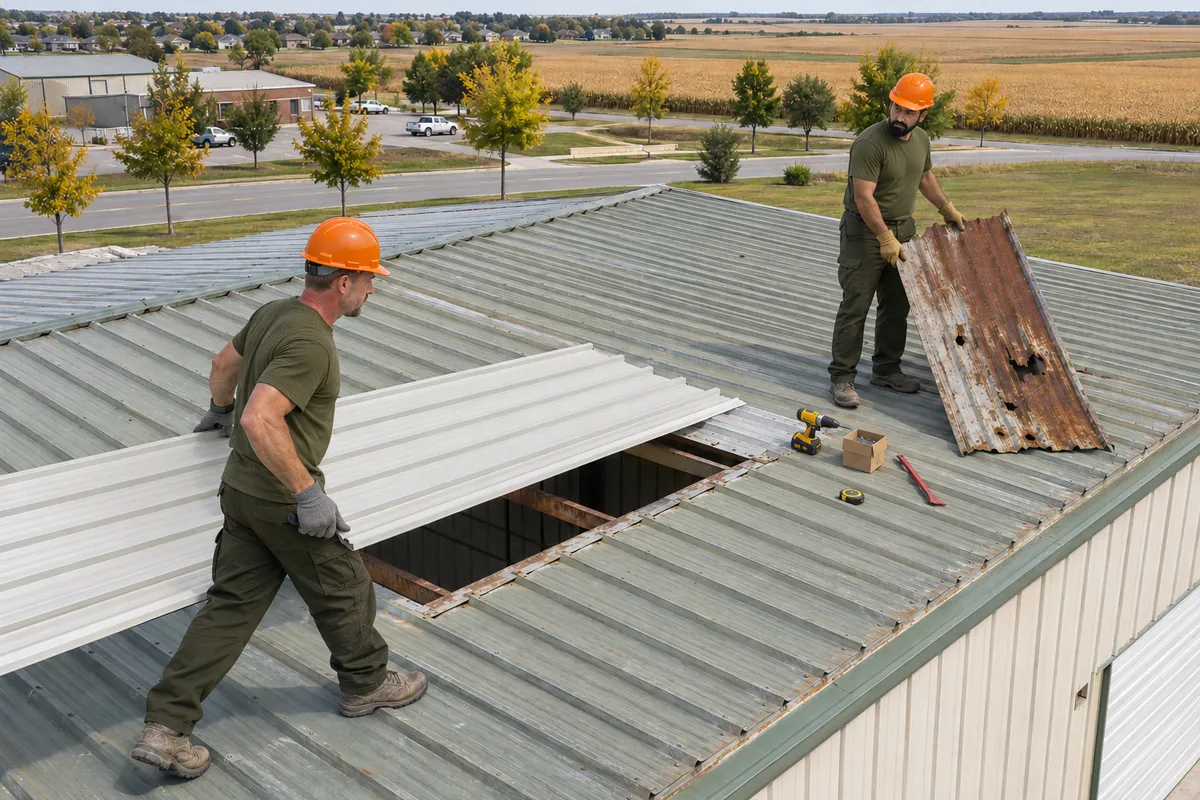
Screw lines, end laps, and loose trim on steel roofs get repaired once the trace ends there.
Metal roof repair
Fan curbs, stacks, and pipe penetrations on plant roofs get reflashed for the exhaust they face.
Industrial roof repairShort answers on storm leaks, finding the source, rooftop units, and snowmelt.
No. A leak in a downpour means water found an opening that light rain never reaches, such as a low flashing, a lap edge, or a slow drain. Small leaks soak insulation and rust the deck long before a stain shows on the ceiling, so it pays to trace and close them early.
Look for punctured membrane, split laps, cracked flashing, and dented edge metal. Hail bruises membrane over soft insulation, and some of that damage only starts leaking during later storms. We walk the whole roof, photograph each hit, and make temporary or permanent repairs. The photos also support an insurance claim if you file one.
From the inside out. We mark the drip, then check the roof straight above it and upslope, because water often runs along deck flutes or purlins before it falls. Moisture readings, infrared scans, and controlled water tests narrow the search, and seams, curbs, and penetrations near the spot are checked first.
Three parts usually fail: the curb flashing, the unit's cabinet panels, or the condensate line. Vibration and roof movement crack the curb flashing, loose panels let rain into the unit and down through the curb opening, and a clogged condensate line spills water onto the roof. We check all three on the same visit.
Meltwater refreezes at cold drains, scuppers, and edges, then backs up behind the ice and runs under flashing. Snow drifted against a parapet keeps that wall flashing wet for days. National Weather Service climate summaries for Omaha show freezing weather and snowfall every winter, so we clear drains and fix flashing that lets backed-up water in.
Point us to the stain and we will trace it to the opening on the roof, repair it, and show you photos of both.