Backed-Out Screws
- You See
- Screw heads standing proud of the panel, some with rust streaks below.
- What It Means
- Panels grow and shrink with temperature swings, working screws loose until each one leaves an open hole in the roof.
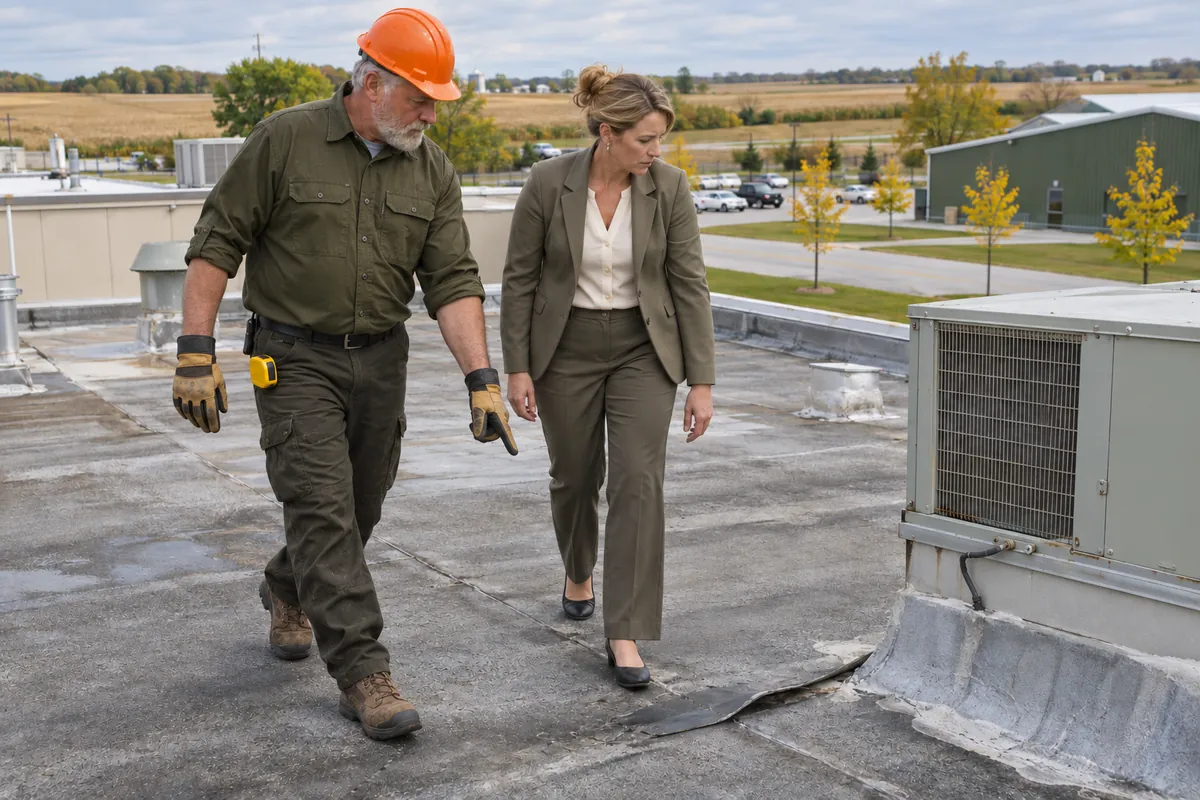
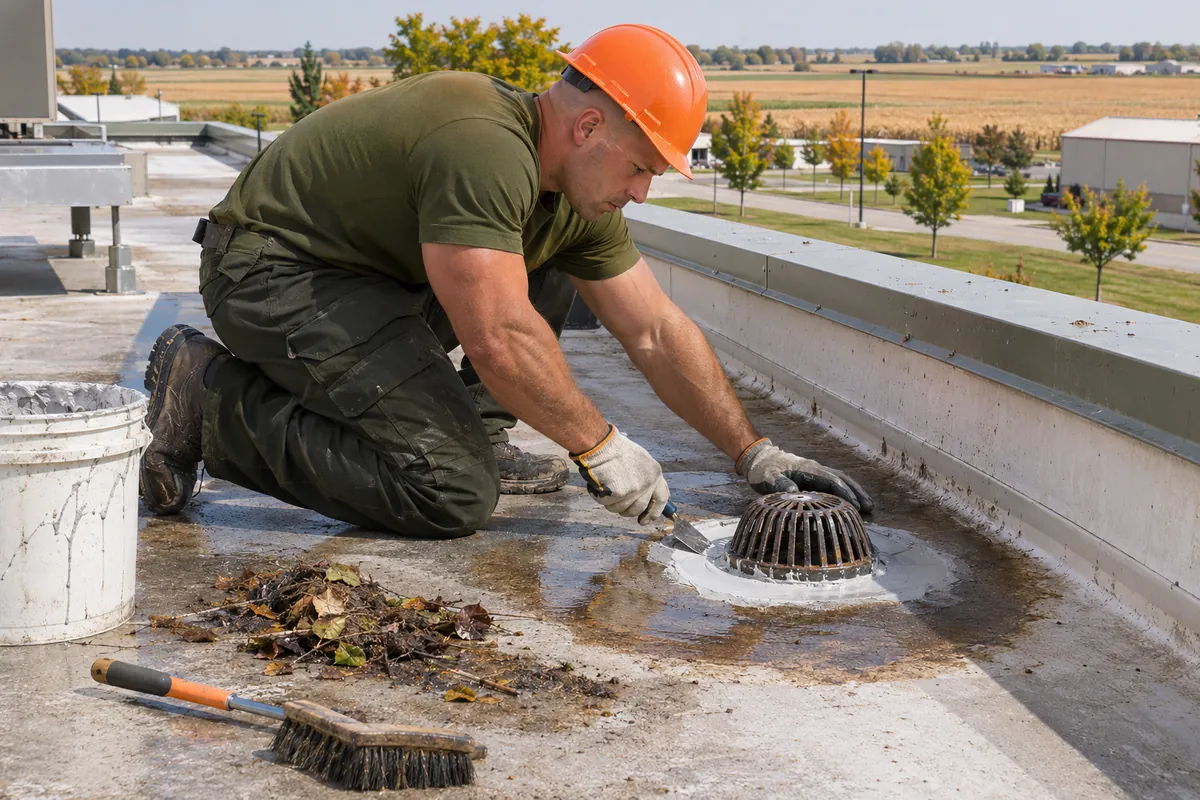
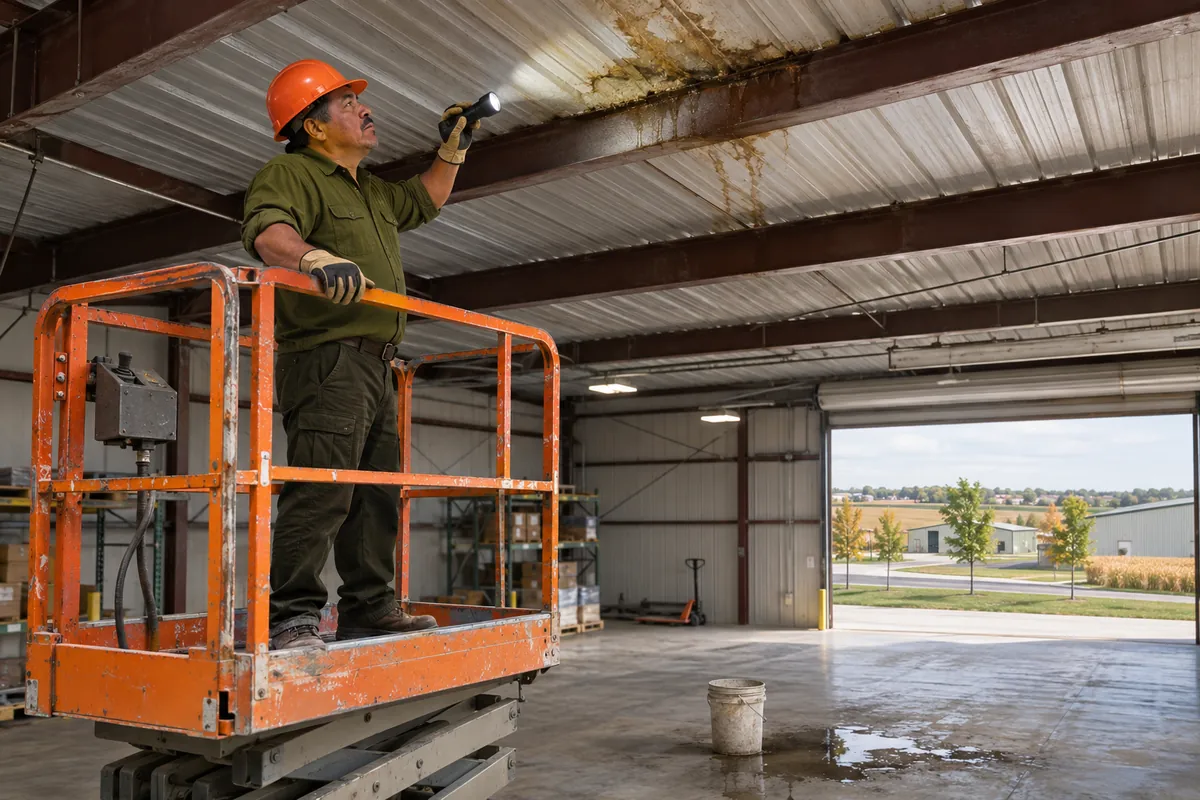
As a Papillion commercial metal roof repair contractor, we replace failed fasteners, reseal laps, and swap rusted panels on exposed-fastener and standing-seam roofs.
New screws and washers
Laps cleaned before sealing
Matching panel profiles
Photos of each fix
Papillion commercial metal roof repair covers most fastener, lap, and trim problems. Here is where repair stops and re-sheeting or a new roof takes over.
Metal roofs fail at the same handful of details. The cause on each card tells us which fix comes first.
Each fix below matches a detail on the roof. Most calls combine fastener work with lap or panel repair.
Worn screws come out and new screws with fresh washers go in; stripped holes get a larger diameter screw that bites clean metal.
Old sealant is scraped off, stitch screws replaced, butyl goes into the lap, and reinforced seam tape covers the joint.
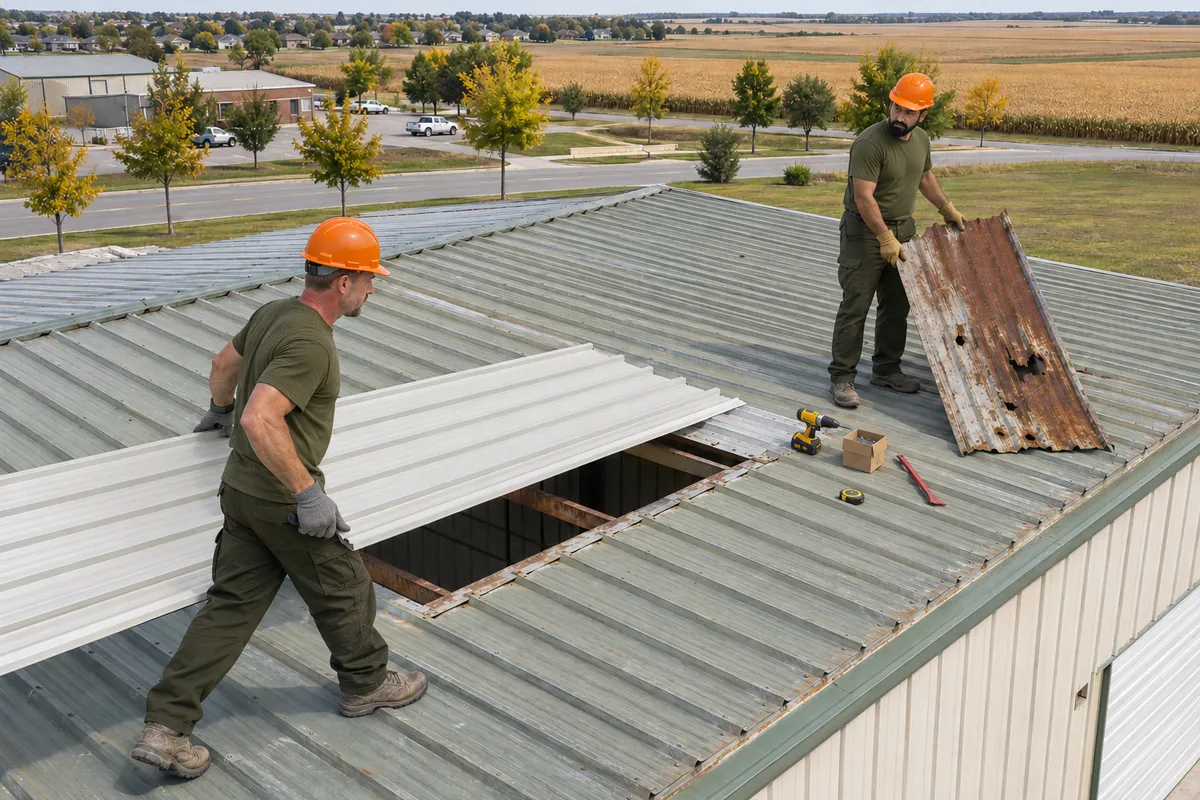
Panels with holes or soft spots come off and matching profiles lap into the panels around them on the same purlin line.
Cracked skylight panels are swapped for the same rib profile, and curbs get new closures and flashing on all four sides.
Fixing fasteners and laps before rust spreads keeps a steel roof in service for more years.

Most metal roof drips start at a screw or a lap. Replacing every failed fastener on a slope and resealing its laps closes hundreds of small openings in one visit, so water stops reaching the purlins and the insulation blanket underneath.
Dry laps and fastener holes keep water off the purlins and girts that carry the roof panels.
Shops and machine sheds keep tools, stock, and vehicles out of the drip once the openings in the roof above them close.
Our report marks panels that are thinning, so you can plan replacement before they rust through.
Streaks mean water is getting in around the fastener. Book an inspection and we will check every screw line on that slope.
The steps move between the roof and the inside of the building, where metal roof leaks are easiest to spot.
We look at the underside of the panels from inside for daylight, rust drips, and wet insulation blanket before going up.
Every fastener row, end lap, ridge, and penetration on the affected slopes gets checked, with photos of each failure.
Failed screws come out row by row and new ones go in at the right torque, so the washers seal without crushing.
Laps are cleaned, sealed, and taped, and loose ridge and rake trim is fastened back down tight.
After the next rain or a hose test, the inside check is repeated under the laps and screws that dripped.
Metal buildings often carry flat sections, equipment curbs, and leaks that travel along the purlins.

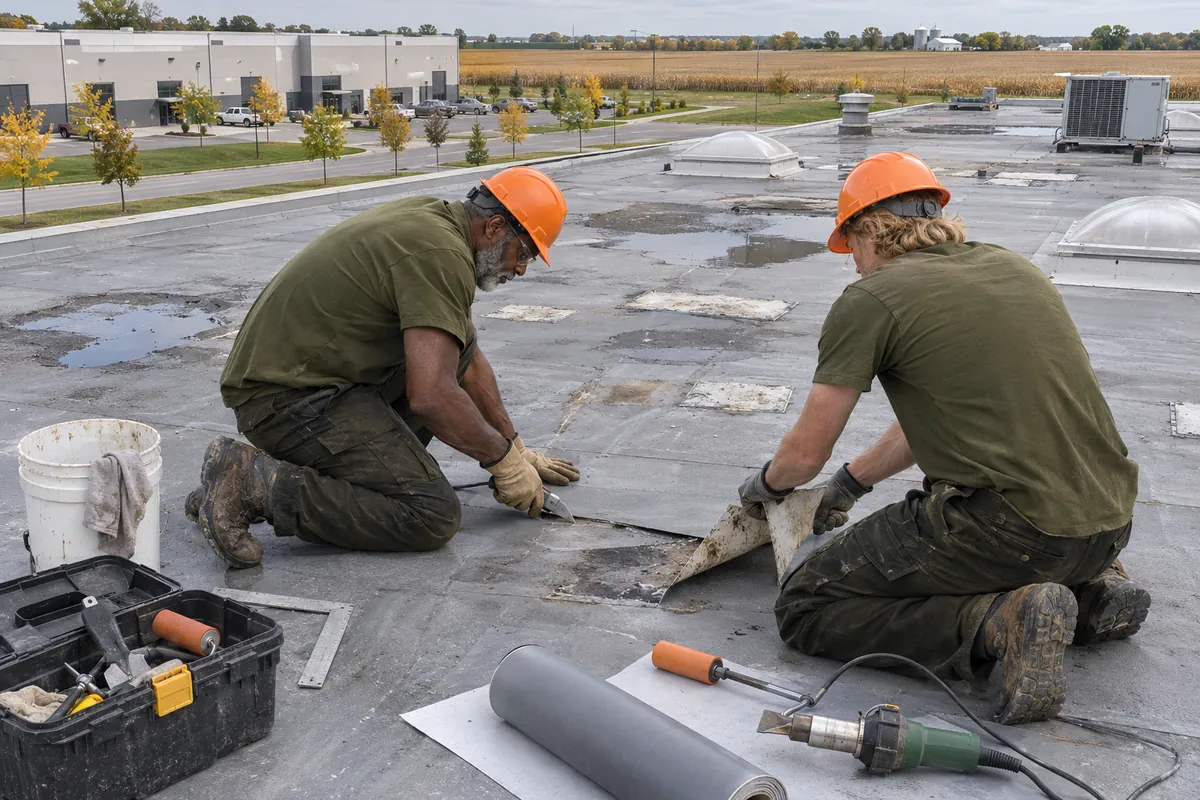
Low-slope membrane sections and office wings attached to a steel building need membrane repair.
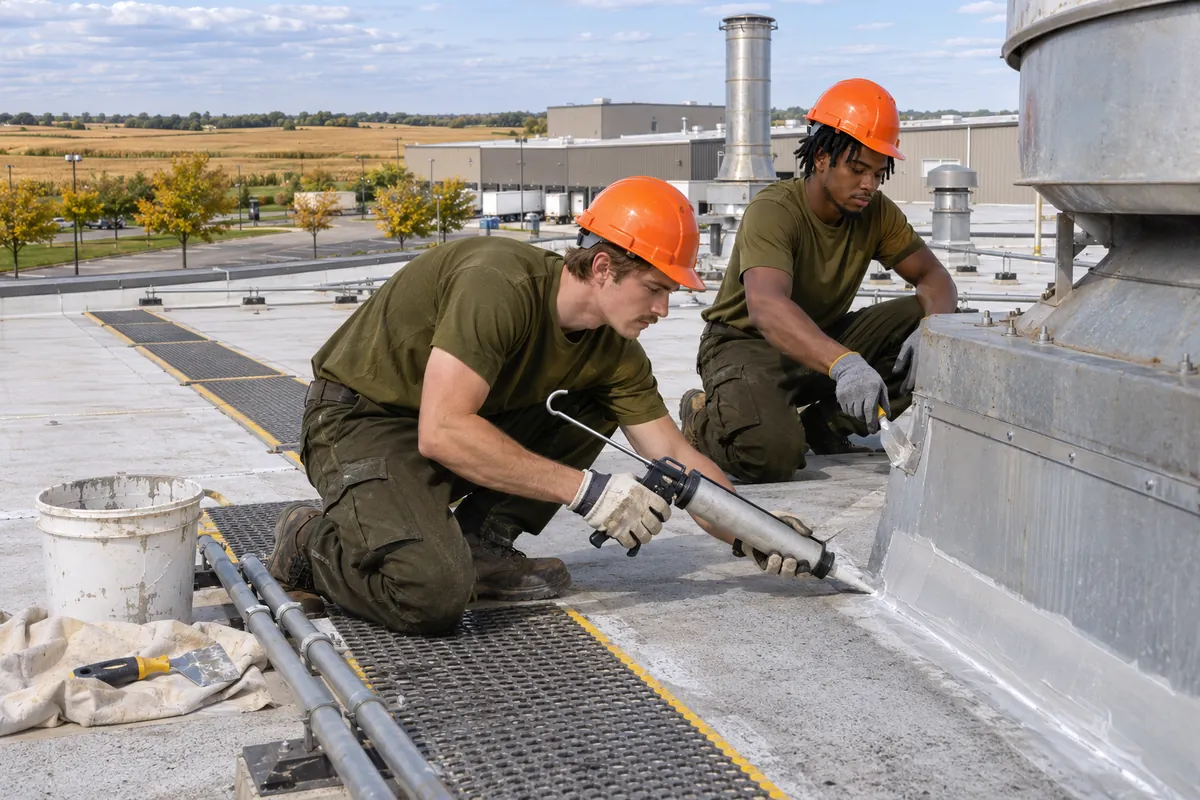
Flat roof repair
Water that runs along a purlin and drips far from its opening gets traced first.
Leak repair
Metal plant roofs with exhaust fans and stacks need flashing built for heat and grease.
Industrial roof repairShort answers on metal roof leaks, fasteners, panels, seams, quick fixes, and storm checks.
Failed fasteners top the list on Papillion buildings. Washers harden and crack from sun and cold, and screws loosen as panels expand and contract, leaving open holes. After fasteners, the usual leak points are end laps, ridge caps, and flashing around curbs and skylights, so we check all of them on every metal roof call.
Each worn screw is replaced with a new screw and washer. Holes that are stripped or stretched get an oversized screw that cuts fresh threads, and empty holes left by old equipment get a metal patch and sealant. We drive new screws to the right torque, since an overtightened screw crushes its washer.
Replace the panel once rust has gone through the steel or the metal has turned soft and flaky at the laps and fastener lines. Surface rust on firm steel can be cleaned and treated instead. New panels match the existing rib profile and lap under and over the panels beside them.
Seam repair starts by scraping out the old, dried sealant so new material bonds to clean metal. Loose stitch screws are replaced, butyl tape or sealant goes into the lap where the panels allow it, and a reinforced tape or fabric and mastic layer covers the joint. Opened standing seams are recrimped or reclipped.
For a few weeks, sometimes. Those products usually go over dirty metal and loose screws, and they crack once the panels start moving with the weather. A lasting fix replaces the fasteners, cleans the lap, and uses sealants made for metal roofing. Any old patch material comes off before we start.
Walk the perimeter first and look for lifted panel edges, loose ridge cap or rake trim, dents, and fasteners torn through the metal. Sarpy County has seen damaging wind before; NOAA's storm database records an EF2 tornado there on June 16, 2017. We inspect seams, fasteners, and flashing after storms and fasten down anything that moved.
Tell us the building type and where the drips land. We will check every fastener row on that slope and send photos of what we find.